
Cardiac arrest, choking, severe bleeding, and other medical emergencies can happen anywhere and at any time. A coworker collapses in a meeting room. A child chokes at a family dinner. A swimmer loses consciousness at the pool. The people nearby do not need to be doctors to help. They just need training.
This guide covers everything you need to know about first aid and CPR classes in Maryland: what the courses include, who should take them, how certification works, and how to choose the training format that fits your schedule and career.
Why CPR and First Aid Training Matter
Sudden cardiac arrest takes more than 350,000 lives outside of hospitals in the United States each year. Studies consistently show that immediate CPR from a bystander can double or even triple survival rates. First aid training closes an equally important gap: the window between when an emergency happens and when professional help arrives.
Maryland has a strong network of emergency responders, but response times vary depending on location. In rural counties, EMS arrival can take ten minutes or longer. Training ordinary people to act in those first minutes saves lives that would otherwise be lost.
For healthcare professionals, the stakes are even higher. Nurses, physicians, EMTs, paramedics, and medical assistants are expected to respond competently under pressure. Certification through the American Heart Association confirms they can do exactly that.
What Is CPR Training?
Cardiopulmonary resuscitation (CPR) is a lifesaving technique that keeps blood and oxygen moving through the body when the heart stops beating or breathing ceases. CPR training teaches you:
- How to recognize cardiac arrest and respiratory emergencies
- Correct hand placement and compression depth for adult, child, and infant CPR
- Rescue breathing techniques
- How to use an automated external defibrillator (AED)
- Single-rescuer and two-rescuer CPR sequences
Maryland CPR Classes follows the American Heart Association’s evidence-based guidelines, which are updated every five years to reflect the latest science in resuscitation. Every student who completes an AHA CPR course receives a recognized certification card.
What Is First Aid Training?
First aid training goes beyond CPR to cover a broader range of emergencies. A first aid course teaches you how to respond to situations like:
- Cuts, lacerations, and wound care
- Burns and scalds
- Choking in adults, children, and infants
- Broken bones and sprains
- Allergic reactions and anaphylaxis
- Stroke recognition using the FAST method
- Diabetic emergencies
- Heat exhaustion and heat stroke
- Seizures
First aid certification is often combined with CPR and AED training into a single course. This combination is required by many employers in Maryland, including schools, childcare facilities, gyms, summer camps, and construction companies.
Who Should Take CPR and First Aid Classes in Maryland?
Healthcare Professionals
CPR certification is not optional for most healthcare roles. Nurses, physicians, paramedics, EMTs, medical assistants, dental hygienists, physical therapists, and other clinical staff need current certification to maintain employment and meet hospital or facility requirements. Basic Life Support (BLS) certification is the standard for most clinical settings. Advanced providers may also need ACLS or PALS.
School and Childcare Workers
Maryland law requires childcare workers and many school employees to hold current CPR and first aid certification. Teachers, teaching assistants, school nurses, and camp counselors working with children benefit significantly from these skills, and many employers require certification as a condition of hire.
Fitness and Recreation Professionals
Personal trainers, coaches, lifeguards, and recreation staff regularly put clients through physical exertion. The risk of a cardiac event or injury is real in these settings. Most facilities in Maryland require fitness professionals to hold CPR and AED certification.
Workplace Safety Roles
Workplace safety standards call on employers to ensure trained responders are available, particularly in high-risk environments, remote worksites, and large facilities. CPR and first aid training from an American Heart Association authorized training center gives employees the skills to respond confidently in an emergency. Group on-site training makes it straightforward to certify an entire team without disrupting the workday.
Parents, Caregivers, and the General Public
You do not need a professional reason to get certified. Parents, grandparents, babysitters, and anyone who wants to be prepared for an emergency can take a CPR and first aid course. The training is accessible, practical, and valid for two years.
Types of CPR and First Aid Courses Available in Maryland
Maryland CPR Classes offers a full range of American Heart Association certification courses. Here is an overview of what is available and who each course is built for.
Heartsaver First Aid CPR AED
The Heartsaver course is the entry-level option for non-healthcare professionals. It covers adult, child, and infant CPR, AED use, and relief of choking, and builds further with wound care, burns, fractures, and other common injuries and emergencies. It is one of the most popular choices for teachers, office workers, parents, fitness staff, childcare providers, and community organizations throughout Maryland. Certification is valid for two years.
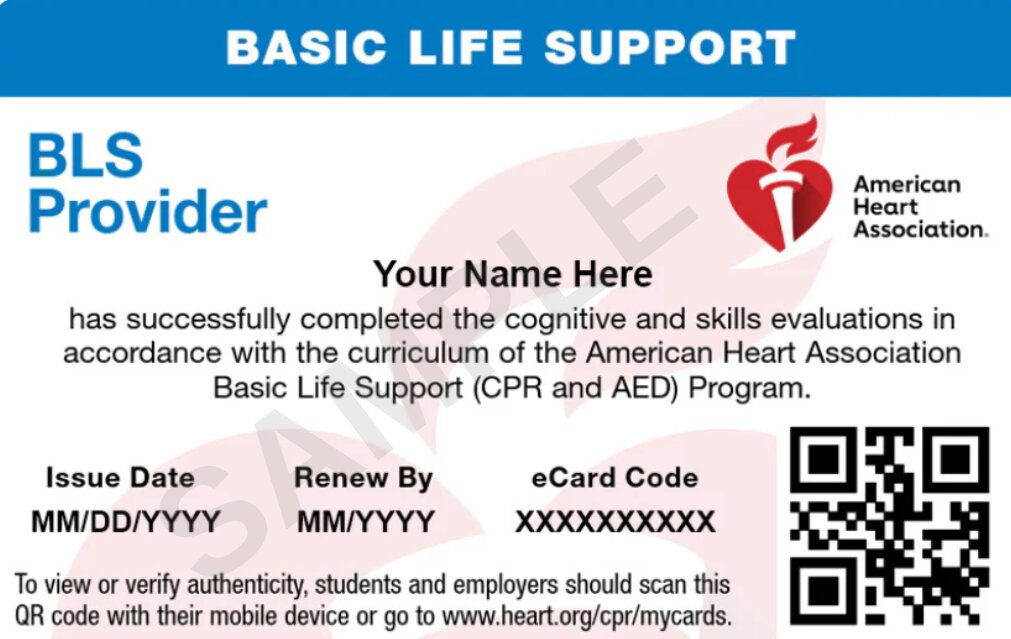
Basic Life Support (BLS)
BLS certification is the healthcare-level CPR course. It is required for nurses, paramedics, EMTs, respiratory therapists, dental hygienists, and a wide range of other clinical roles. The course covers high-quality CPR for adults, children, and infants; team-based resuscitation; bag-mask ventilation; and AED use. BLS certification from the AHA is accepted at virtually every healthcare facility in Maryland.
Advanced Cardiovascular Life Support (ACLS)
ACLS is required for physicians, advanced practice nurses, ICU staff, emergency department personnel, anesthesiologists, and other providers who manage complex cardiac emergencies. The course covers recognition and management of cardiac rhythms, airway management, pharmacology in resuscitation, post-cardiac arrest care, and team dynamics during high-stakes scenarios. A current BLS card is required before enrolling.
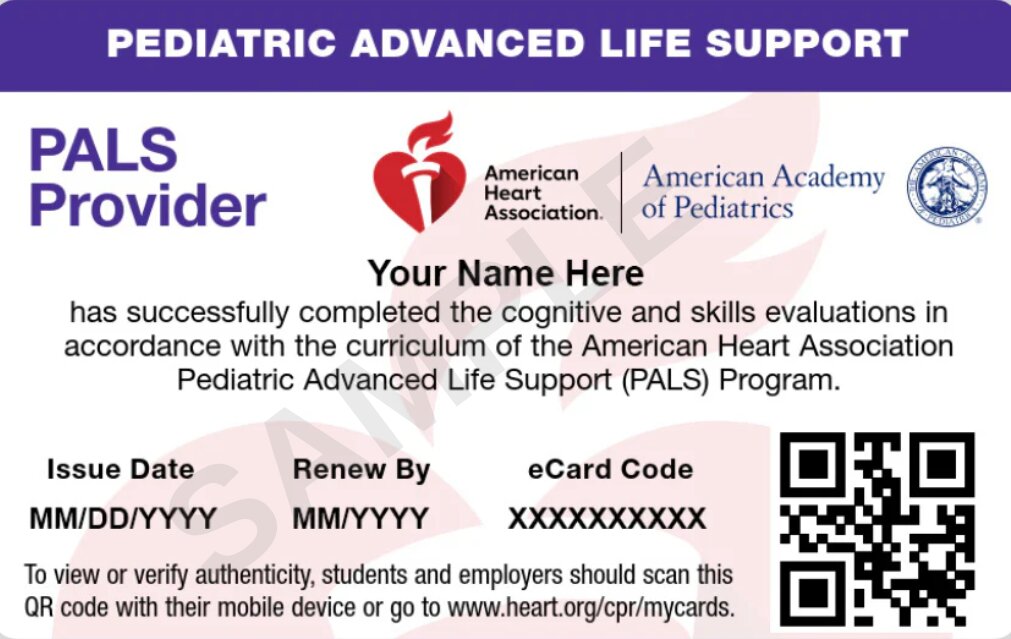
Pediatric Advanced Life Support (PALS)
PALS is the pediatric equivalent of ACLS. It is required for nurses and physicians working in pediatric emergency care, neonatal units, and pediatric ICUs. Students learn to assess and manage respiratory failure, shock, and cardiac arrest in infants and children using a systematic approach. BLS certification is a prerequisite.
Traditional Instructor-Led Classes vs. Self-Guided Learning
One of the most common questions people ask before signing up is: should I take a traditional classroom course or go with a self-guided learning option? Both lead to the same AHA certification. The right choice depends on your schedule, learning style, and course type.
Traditional Instructor-Led Classes
Traditional classes take place in person with a certified AHA instructor. Students practice skills on manikins, get real-time feedback, and complete their certification in a single session. This format works well for people who prefer structured group learning, benefit from live instructor feedback, or are taking ACLS or PALS (which require hands-on practice with an instructor present).
Self-Guided Learning
Self-guided learning has two steps. First, you complete the full knowledge portion online on your own time and at your own pace. This can be done from home, during a lunch break, or whenever it fits your schedule. There is no set start time and no class to attend for this portion.
Once you finish the online content, you visit a CPR Verification Station to complete your hands-on skills check. No instructor is present at the station. Instead, a Voice-Assisted Manikin guides you through every step of the CPR sequence, providing real-time audio cues on compression rate, depth, and hand placement. The manikin assesses your performance directly and confirms competency before your certification is issued.
This format is especially popular with healthcare professionals and busy adults who need flexibility. The online portion removes the need to sit through content in a classroom, and the self-directed skills check at the CPR Verification Station means you can complete your certification without coordinating around an instructor’s schedule.
The table below summarizes the key differences between the two formats:
| Feature | Traditional Instructor-Led | Self-Guided Learning |
|---|---|---|
| Format | In-person classroom | Online learning + skills check |
| Scheduling | Set class times | Complete at your own pace |
| Skills Practice | Instructor-guided manikins | Voice-Assisted Manikins |
| Competency Check | Instructor observation | Voice-Assisted Manikin at CPR Verification Station |
| Ideal For | Those who prefer group learning | Busy professionals |
| Certification Speed | Same day after class | Fast, flexible timeline |
Both formats result in the same official AHA certification card. Your employer or licensing board will accept either.
How Long Does CPR and First Aid Certification Last?
American Heart Association CPR and first aid certifications are valid for two years from the date of completion. This applies to all AHA courses, including Heartsaver CPR AED, Heartsaver First Aid CPR AED, BLS, ACLS, and PALS.
Healthcare professionals should keep a close eye on their expiration dates. Many hospitals and clinics require staff to renew before the certification expires, which means scheduling a renewal class at least several weeks in advance rather than waiting until the last moment.
Renewal courses, sometimes called recertification courses, cover updates to AHA guidelines and allow experienced providers to move through the course more efficiently than first-time students. The renewal is the same two-year certification as the initial course.
How to Choose the Right CPR and First Aid Course
With several courses available, it helps to narrow down your options before you register. Here are the most important factors to consider.
What Does Your Employer or License Require?
Healthcare professionals should check their specific requirements. Hospitals almost universally require BLS. Physicians and advanced nurses in critical care settings typically need ACLS. Pediatric providers need PALS. Non-clinical staff and volunteers may only need Heartsaver. When in doubt, ask your HR department or licensing board.
What Is Your Schedule Like?
If you can commit to a half-day or full-day session, traditional instructor-led classes are a great choice. If your schedule is unpredictable, self-guided learning lets you complete the online portion whenever you have time and schedule the short in-person skills session separately.
Are You Training a Group?
Maryland CPR Classes offers group on-site training for businesses, healthcare organizations, schools, and community groups. If you need to certify a team, bringing the instructor to your location is often more efficient and cost-effective than sending employees to individual classes.
Benefits of Taking CPR and First Aid Training in Maryland
- AHA-recognized certification accepted by hospitals, clinics, schools, and employers throughout Maryland
- Multiple training formats including traditional classes and self-guided learning with CPR Verification Stations
- Courses for every level, from basic Heartsaver for the general public to ACLS and PALS for advanced healthcare providers
- Group on-site training for teams and organizations
- Voice-Assisted Manikins that give real-time feedback during practice sessions
- Two-year certification with straightforward renewal options
- Training based on the most current American Heart Association guidelines
Get Certified with Maryland CPR Classes
Whether you are a nurse renewing your BLS card, a teacher completing required first aid certification, or a parent who wants to be ready for an emergency at home, Maryland CPR Classes has a course for you. All training follows American Heart Association guidelines and results in a recognized, two-year certification.
You can choose the format that fits your life. Traditional instructor-led classes give you hands-on learning in a structured environment with a certified AHA instructor. Self-guided learning lets you complete the knowledge content on your own schedule and then visit a CPR Verification Station at your convenience, where a Voice-Assisted Manikin walks you through the skills check and assesses your performance with no instructor required.
First aid and CPR classes in Maryland are available for individuals, healthcare teams, workplace groups, and community organizations. Getting certified is one of the most practical things you can do, and it has the potential to make a real difference when it matters most.
Register for a class with Maryland CPR Classes today and walk away with the skills and confidence to respond in any emergency.
Frequently Asked Question
Do I need any prior medical training to take a CPR course?
No prior training is required for Heartsaver CPR AED or Heartsaver First Aid CPR AED. These courses are built for the general public. BLS requires no prerequisite either, but it is taught at a higher level and is intended for people working in clinical settings. ACLS and PALS require a current BLS card before enrollment.
What is the difference between BLS and standard CPR certification?
Standard CPR certification, such as the Heartsaver course, is for non-healthcare providers and members of the general public. BLS (Basic Life Support) is the healthcare-level CPR course that covers advanced techniques, team-based resuscitation, and bag-mask ventilation. Most hospitals and clinical employers require BLS specifically.
How long does a CPR and first aid class take?
Class length varies by course. A Heartsaver CPR AED class typically runs two to three hours. Heartsaver First Aid CPR AED is longer, usually four to five hours. BLS takes approximately three to four hours in a traditional format. ACLS and PALS are full-day or multi-day courses. Self-guided learning options reduce the in-person time significantly because you complete the knowledge portion online in advance.
Can I take a CPR class online and get certified?
The American Heart Association requires a hands-on skills component for all CPR certifications. Online-only courses do not meet AHA standards. Self-guided learning solves this by combining online content with a self-directed skills check at a CPR Verification Station. The Voice-Assisted Manikin at the station guides you through the skills and assesses your performance without an instructor present, giving you full flexibility while still meeting AHA requirements.
How soon will I receive my certification card?
You receive your AHA digital certification card immediately after completing your course and passing your skills check.
Is group on-site training available for businesses in Maryland?
Yes. Maryland CPR Classes offers group on-site training for businesses, healthcare organizations, schools, community groups, and other teams. An instructor comes to your location, which makes it easier to certify a large number of employees without disrupting workflows.
How often do I need to renew my CPR certification?
All AHA certifications are valid for two years. You will need to complete a renewal course before your card expires to maintain certification. Healthcare facilities typically require proof of current certification, so it is best to schedule renewal well before the expiration date.