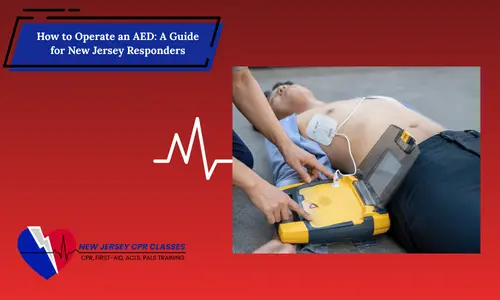
A cardiac emergency can happen without warning, whether at a workplace, school, gym, public facility, or community setting. When someone suddenly collapses and is not responding normally, knowing what to do can help you take the right steps while emergency medical services are on the way.
An Automated External Defibrillator, or AED, provides clear voice and visual instructions that guide the user through the emergency response process. The device checks the heart rhythm and determines whether a shock is appropriate, so responders do not need to interpret the rhythm themselves.
For New Jersey responders, learning how an AED works, how to operate it, and which safety considerations to follow can help them respond more confidently during a cardiac emergency.
What Is an AED and How Does It Work?
An AED is a small, portable, battery-operated medical device used during sudden cardiac arrest. Adhesive pads placed on the person’s bare chest detect the heart’s electrical activity. The device then analyzes the heart rhythm and determines whether treatment is needed.
When a shockable rhythm is detected, the device determines whether a shock is appropriate and provides instructions for delivering it to help restore a normal heart rhythm. Spoken and visual prompts guide the responder through the process, while built-in safety features prevent a shock from being delivered when one is not advised.
When to Use an AED
An AED may be appropriate when sudden cardiac arrest is suspected. Recognizing the signs of cardiac arrest helps determine when the device may be needed.
Signs of possible cardiac arrest include:
- No response to verbal or physical stimulation
- No normal breathing
- Occasional gasping or abnormal breathing sounds
- Sudden collapse without signs of recovery
What Are the Steps for Using an AED?
Steps for using an AED are straightforward, but the exact operation may differ between devices. Follow the AED’s instructions throughout the process and complete each step as directed.
The guidance below covers common AED use for adults and children who meet the standard pad requirements. For children younger than 8 years or weighing 55 pounds (25 kg) or less, pediatric pads or a pediatric setting should be used when available.
1. Recognize Cardiac Arrest and Activate Emergency Response
Look for unresponsiveness and abnormal or absent breathing. Call 911 or have someone nearby contact emergency services while another person obtains an AED.
2. Start CPR While the AED Is Retrieved
Begin chest compressions as soon as possible. Continue CPR until the AED arrives and is ready to assess the heart rhythm.
3. Turn On the AED
Activate the device when it becomes available. Some AEDs start automatically when the lid is opened, while others require the power button. Listen to the prompts and follow the instructions shown on the device.
4. Expose and Dry the Chest
Remove clothing that prevents the electrode pads from contacting bare skin. If moisture is present on the chest, dry the skin before applying the pads.
5. Attach the Electrode Pads
Remove the protective film from each electrode and position the pads directly against the exposed chest as indicated by the placement images on the pads.
For an adult, place one electrode on the upper right side of the chest, below the collarbone, and the other on the lower left side of the chest, below the armpit. When treating a smaller child, check the AED instructions for the appropriate electrode position and use pediatric placement when available.
6. Allow the AED to Analyze the Rhythm
Stop chest compressions when the AED begins its analysis. Make sure no one is touching the individual while the device checks the heart rhythm. The AED will indicate whether a shock is recommended.
7. Give the Shock When Advised
If the AED advises a shock, make sure no one is touching the individual before proceeding. Follow the device prompts carefully. Depending on the model, you may need to press the indicated button, while some AEDs deliver it automatically.
8. Continue CPR
Continue CPR after the AED completes its treatment or indicates that no shock is needed. Leave the electrode pads in place and respond to the device prompts until trained medical personnel arrive, the individual begins showing signs of life, or continuing care is no longer safe.
What Should You Do After AED Treatment?
Once AED treatment is complete, stay with the individual and monitor their condition until emergency medical professionals take over.
When EMS arrives, provide relevant information about the emergency, including when the collapse was noticed, when CPR began, and what the AED indicated. Report any significant changes you observe and follow the instructions of the responding medical team.
Are AEDs Safe to Use?
Yes, using an AED is generally safe when the device is operated according to its instructions. Many people have a misconception that an AED can deliver a shock at any time or harm someone who does not need one. In reality, the device analyzes the heart rhythm before determining whether a shock is appropriate.
Following the AED prompts and placing the electrode pads correctly helps support safe use. Everyone should avoid touching the individual while the AED is checking the heart rhythm or delivering a shock.
Is an AED the Same as CPR?
No. CPR and an AED support different parts of cardiac arrest care. CPR uses physical actions to keep blood circulating, while an AED examines the heart’s electrical activity and determines whether an electrical shock is appropriate.
| CPR | AED |
| Involves chest compressions and rescue breaths when appropriate | Uses electrode pads to assess the heart rhythm |
| Helps keep blood moving through the body | Determines whether defibrillation may be needed |
| Can be started immediately when cardiac arrest is suspected | Is introduced when the device becomes available |
| Requires a responder to perform the technique | Provides spoken or visual guidance during operation |
| Remains part of resuscitation while AED care is provided | Supports treatment decisions based on the detected rhythm |
Where Are AEDs Found in New Jersey?
AEDs can be found in many places across New Jersey where people gather for work, education, travel, recreation, and other activities. Common locations include:
- Schools and colleges
- Airports and transportation facilities
- Shopping centers and retail stores
- Hospitals and healthcare facilities
- Gyms and sports centers
- Hotels and community facilities
- Offices and workplaces
- Places of worship
- Government and public buildings
Since AEDs are placed in many public and private settings, knowing how to use one can be valuable for bystanders, healthcare professionals, teachers, coaches, childcare providers, workplace staff, security personnel, parents, and caregivers. Familiarity with the device can help these individuals respond promptly during a cardiac emergency while waiting for emergency medical services to arrive.
What Are Special Considerations When Using an AED?
Certain situations require additional attention when using an AED. Checking the individual’s surroundings and chest condition can help ensure proper electrode contact and safe treatment.
- Wet skin: Move the individual away from standing water and dry the chest before applying the electrode pads.
- Medication patches: Remove a visible medication patch from an area where an electrode needs to be placed, then wipe the skin before applying the pad.
- Implanted medical devices: Avoid placing an electrode directly over a visible pacemaker or implanted defibrillator. Position the pad beside the device instead.
- Excessive chest hair: If thick hair prevents the electrodes from adhering properly, follow the manufacturer’s instructions for improving contact.
- Metal surfaces: Treatment can be provided while the individual is on a metal surface when the electrodes are positioned correctly and do not touch the metal directly.
- Pregnancy: Defibrillation can be performed during cardiac arrest in pregnancy when indicated. Resuscitation should not be delayed.
- Children and infants: Use pediatric electrodes or a pediatric setting when available and appropriate for the child’s age and size. Follow the manufacturer’s guidance.
- Flammable environments: Keep the device away from flammable gases, liquids, or materials that could catch fire during use.
Can an Untrained Person Use an AED?
Yes. You do not have to be a healthcare professional or have prior AED training to use the device during a suspected cardiac arrest. AEDs provide clear spoken and visual instructions that guide the user through pad placement, rhythm analysis, and treatment.
Training can provide useful preparation for responding during an emergency. Learning Heartsaver CPR and AED skills allows you to practice the response beforehand and understand how to:
- Recognize when cardiac arrest may be occurring
- Begin CPR while an AED is being obtained
- Apply the electrode pads correctly
- Follow the device’s prompts during rhythm analysis
- Resume CPR when directed
- Continue providing care until EMS takes over
Get AED Training with New Jersey CPR Classes
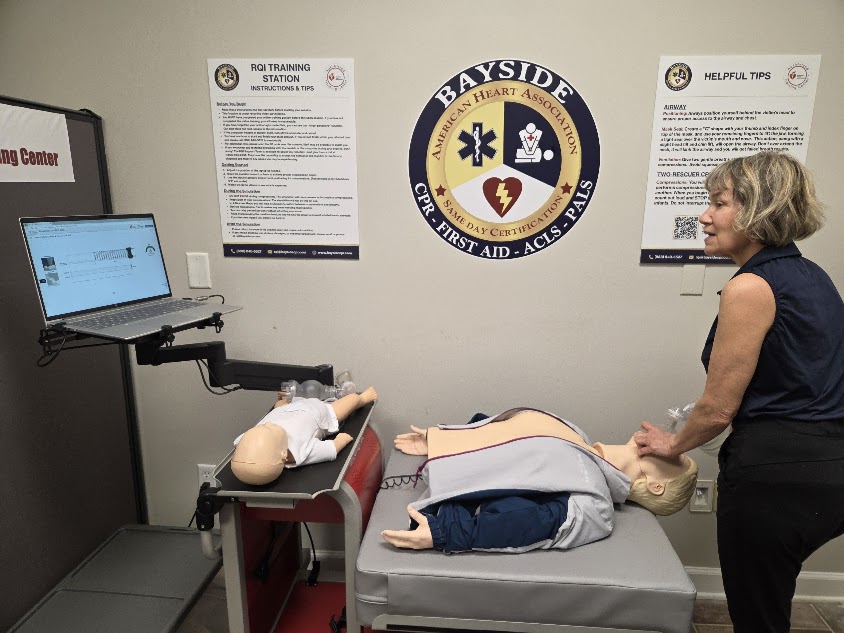
AED training allows you to learn how the device works, practice proper electrode pad placement, and see how CPR and AED use fit together during a cardiac emergency. Hands-on practice can also help you become more comfortable responding when an AED is available.
New Jersey CPR Classes offers Heartsaver CPR AED and Heartsaver First Aid CPR AED courses for individuals and organizations seeking CPR and AED training. The program combines online learning with a practical skills session, allowing participants to study the course material before completing their hands-on requirements. After fulfilling the course requirements, participants receive their course completion credential.
Frequently Asked Questions About AEDs
How Often Should an AED Be Checked?
AEDs should be checked regularly to confirm that the device is ready for use. Regular checks should cover the battery, electrode pads, expiration dates, status indicators, and the device’s overall condition.
Can an AED Be Used on Someone With a Tattoo?
Yes. Tattoos generally do not prevent AED use. The electrode pads should be placed on bare skin according to the positioning instructions supplied with the device.
How Should an AED Be Stored?
An AED should be kept in an accessible location where it can be retrieved quickly during an emergency. The storage area should also meet the manufacturer’s recommendations for temperature, moisture, and other environmental conditions.
What Happens if an AED Does Not Recommend a Shock?
A non-shockable rhythm does not mean that care should stop. Continue resuscitation according to the AED prompts and emergency response protocols while waiting for professional medical assistance.
Can an AED Be Used in a Moving Ambulance?
AED use may be affected by movement during rhythm analysis. Emergency responders should follow their clinical protocols and the device manufacturer’s instructions when using the equipment in a moving vehicle.
Does an AED Need Regular Maintenance?
Yes. Regular maintenance helps keep the device ready for an emergency. Follow the manufacturer’s maintenance schedule and check the battery, pads, status indicator, accessories, and overall condition.