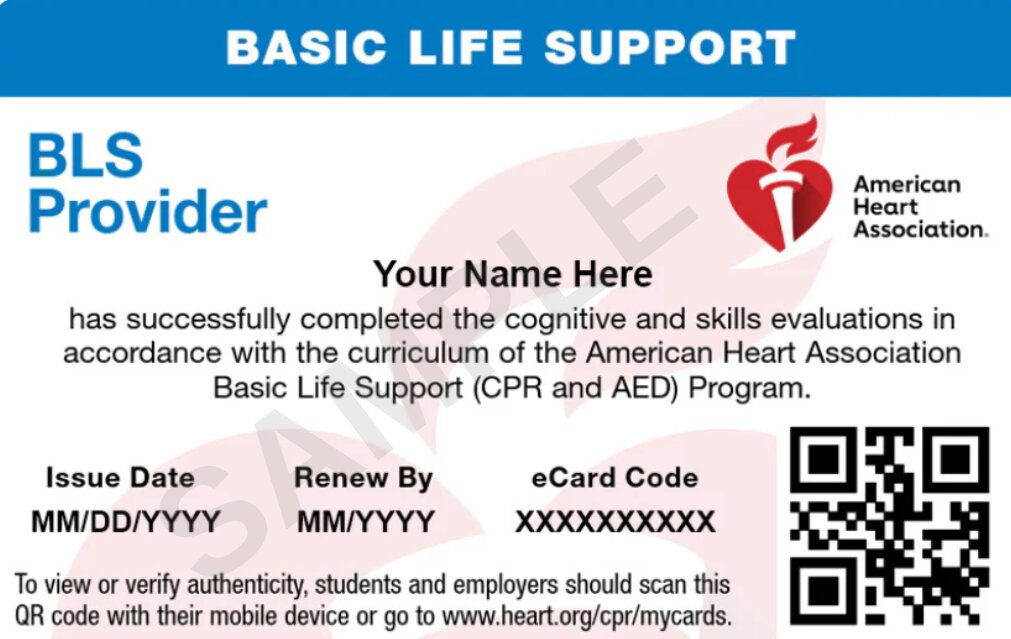
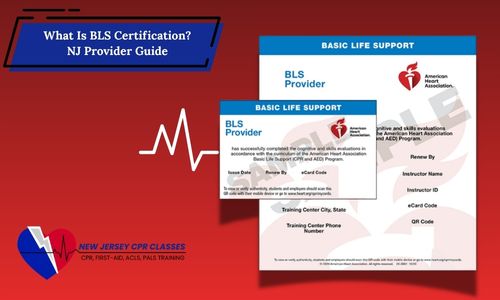
BLS certification, short for Basic Life Support, is the American Heart Association credential that trains healthcare providers to respond to cardiac arrest, choking, and respiratory emergencies in the critical first minutes before advanced care arrives. It’s the entry-level clinical certification nearly every healthcare role in New Jersey expects you to hold, from nursing students on their first clinical rotation to physicians working decades into their career.
If you’re starting a healthcare job, entering a nursing program, or simply renewing a card that’s about to expire, this guide covers exactly what BLS certification involves, who in New Jersey needs it, and how to get certified without losing a chunk of your week to a classroom.
What Does BLS Certification Actually Cover?
BLS certification focuses on the hands-on skills that make the biggest difference in the first moments of a medical emergency, before a resuscitation team, advanced airway equipment, or cardiac medications enter the picture. The course covers:
- High-quality chest compressions and rescue breaths for adults, children, and infants
- Proper AED use, including how to apply pads and interpret the device’s prompts
- Recognizing and relieving airway obstruction in a conscious or unconscious patient
- Two-person and team-based CPR, including how to switch compressors without losing rhythm
- Recognizing the early signs of cardiac arrest and respiratory distress so you can respond before a situation worsens
Unlike general public CPR classes, BLS is built specifically for people who may respond to an emergency as part of a clinical team, which is why it puts heavier emphasis on coordinated, multi-rescuer response rather than a single person acting alone.
Who in New Jersey Needs BLS Certification?
BLS certification is the baseline expectation across nearly every clinical and patient-facing role in New Jersey. It shows up consistently across these groups:
Nurses: RNs and LPNs across New Jersey are expected to hold current Healthcare Provider-level BLS as a condition of hire and continued employment. Major hospital systems throughout the state treat active BLS as non-negotiable for clinical staff, and nursing programs require it before students can begin clinical rotations.
Physicians, PAs, and NPs: BLS is a standard part of hospital credentialing for physicians and advanced practice providers, regardless of specialty. It’s the foundation every other advanced certification builds on.
EMTs and paramedics: BLS-level skills are built directly into EMT and paramedic training in New Jersey, forming the foundation of prehospital emergency response before any advanced interventions come into play.
Medical assistants and dental professionals: Medical assistants, dental hygienists, and dental assistants across New Jersey are commonly required to maintain current BLS as a condition of practice, since patient-facing roles in these settings carry real emergency response responsibility.
Nursing and healthcare students: Students entering clinical coursework are typically required to show a current BLS card before setting foot in a hospital or clinical setting, and programs generally won’t allow rotations to begin without it on file.
BLS requirements in New Jersey are driven largely by individual hospitals, healthcare facilities, and academic programs rather than a single blanket law, which is why it’s worth confirming directly with your employer or program exactly which level of BLS card they expect to see.
Does New Jersey Accept Online-Only BLS Certification?
Generally, no. New Jersey hospitals and healthcare employers consistently expect a hands-on skills verification component as part of BLS certification, not just a certificate from an online-only course with no supervised practice. This makes sense given what the course is meant to prepare you for: performing compressions correctly under pressure isn’t something you can fully demonstrate by clicking through slides.
A blended format solves this well. Completing the knowledge portion online gives you flexibility around your schedule, while a short in-person skills session ensures your technique actually meets the standard employers and credentialing offices expect to see documented.
How New Jersey CPR Classes Structures BLS Training
At New Jersey CPR Classes, our BLS course is built around the reality that most people taking it are already busy working, studying, or juggling both. Our Self-Guided Learning format lets you complete the knowledge portion online, whenever and wherever fits your schedule, rather than blocking out a full day for a classroom course.
Once you finish the online coursework, you’ll come in for a short hands-on skills session at one of our CPR Verification Stations. There, you’ll practice real compressions, rescue breaths, and AED use on a Voice-Assisted Manikin that gives you immediate feedback on your depth, rate, and hand placement. It’s a far more useful way to build real competence than watching a video and hoping your technique matches what’s expected.
For hospitals, nursing programs, and healthcare organizations, we also offer CPR Verification Station rentals for on-site group certification. Instead of sending staff or students out individually, bring BLS certification and renewal in-house for your entire cohort or department, scheduled around your own calendar rather than ours.
How Often Does BLS Certification Need to Be Renewed?
BLS certification through the AHA is valid for two years from your completion date. Renewal usually involves a shorter review of core content followed by a skills check, rather than repeating the entire course from the beginning. Letting your BLS lapse can create real problems, including being pulled from clinical duties, missing a credentialing deadline, or losing eligibility for a nursing program rotation until it’s resolved.
Booking your renewal a few weeks before your card expires, rather than scrambling after it’s already lapsed, keeps you working without interruption.
Getting Started With BLS Certification in New Jersey
If BLS is required for your job, your clinical rotation, or simply as a professional expectation in your field, the most efficient route is an AHA-approved course that includes a genuine hands-on skills component, since that’s what New Jersey employers and academic programs consistently expect to see on your record.
At New Jersey CPR Classes, we’ve built the process around exactly that. Complete your Self-Paced CPR Certification online, then finish with a skills session at a CPR Verification Station near you. You’ll leave with a certification that satisfies New Jersey employer and program requirements, along with skills you can genuinely rely on if you’re ever the first person to respond to an emergency.
Frequently Asked Questions
Is BLS certification required for nursing licensure in New Jersey?
Requirements vary by employer and academic program rather than a single statewide rule. Most New Jersey hospitals and nursing programs require current BLS as a condition of hire or clinical rotation, so it’s best to confirm the specific requirement with your employer or school.
Can I complete BLS certification fully online in New Jersey?
Not typically for clinical or employment purposes. New Jersey healthcare employers generally expect a hands-on skills verification component, so a fully online course without an in-person skills check usually won’t satisfy those requirements.
How long is BLS certification valid?
BLS certification through the AHA is valid for two years from your completion date, after which a renewal course is required.
Who needs BLS certification in New Jersey?
Nurses, physicians, PAs, NPs, EMTs, paramedics, medical assistants, dental professionals, and healthcare students are the groups most commonly required to hold current BLS certification.
What’s the difference between BLS and general public CPR training?
BLS is built specifically for healthcare providers and covers team-based, multi-rescuer response, whereas general public CPR courses are for a single bystander responding alone.