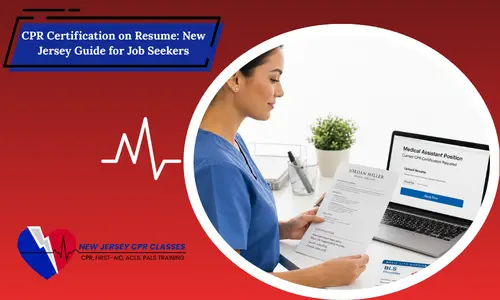
Landing a job in New Jersey often means showing employers that you bring practical skills beyond your education and work experience. CPR certification is one credential that can strengthen a resume, particularly for positions where safety, emergency response, or direct interaction with people is part of the role. Adding this credential tells employers that you are prepared to respond during a medical emergency and have completed recognized training.
Many healthcare facilities, schools, childcare centers, fitness organizations, and public service employers across New Jersey strongly prefer applicants who already have CPR training. Having a current certification before applying can help your application stand out and reduce delays during the hiring process.
Knowing that CPR certification belongs on your resume is only part of the process. You also need to understand where to list it, what details to include, and when it makes the biggest impact. This guide explains how New Jersey job seekers can present CPR certification effectively while avoiding common resume mistakes.
The Importance of CPR Training for Job Seekers
CPR certification demonstrates that you have practical emergency response skills that many employers value, even outside healthcare. Hiring managers often view current credentials as evidence that you are prepared to act during unexpected situations, can follow established procedures, and are committed to workplace safety. These qualities can strengthen your application when employers compare candidates with similar experience and qualifications.
Various job roles, such as nurses, teachers, childcare providers, fitness instructors, lifeguards, coaches, security personnel, and home health aides, prefer candidates with current CPR credentials. Adding this life-saving credential to your resume demonstrates your qualifications and may improve your chances of securing an interview.
How to Put Your CPR Certification on a Resume
Adding your CPR certification to your resume helps employers quickly identify your emergency response training and professional qualifications. The way you present this credential matters, especially when applying for positions where CPR training is required or preferred. A clear and accurate listing allows hiring managers to recognize your certification without searching through unrelated sections of your resume.
1. Add CPR Certification Under the Certifications Section
The Certifications section is usually the most appropriate place to list your CPR certification. Employers often review this section when checking professional credentials, so keeping the information clear and complete makes your qualification easier to verify.
Include details such as the official certification name, training organization, completion date, and expiration date if applicable.
Example:
Certifications
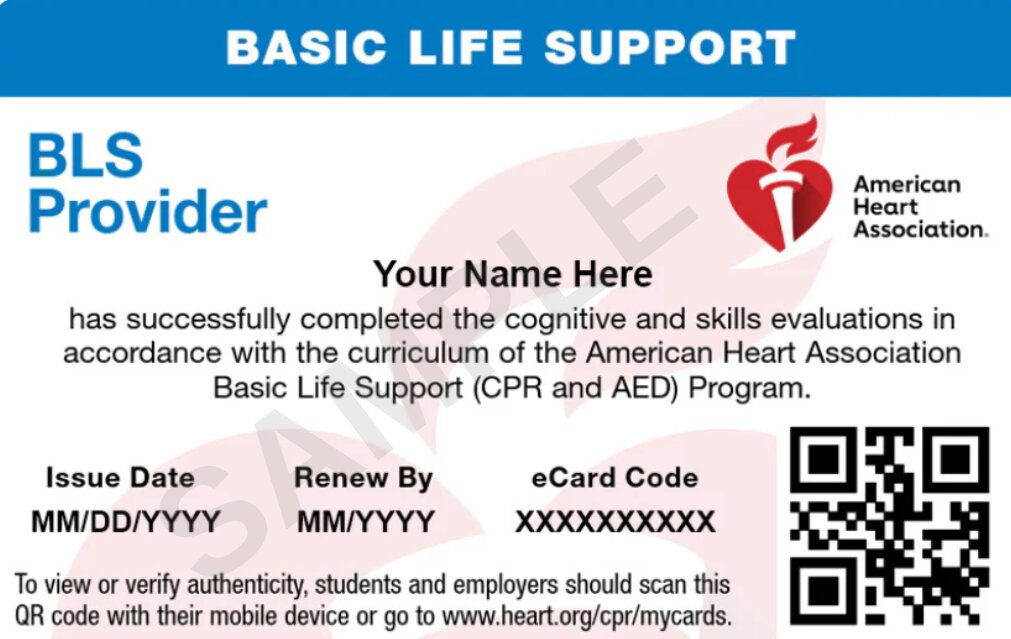
Basic Life Support (BLS) Provider – American Heart Association, Issued: June 2025 | Expires: June 2027
Heartsaver CPR AED Certification – American Heart Association, Issued: July 2024 | Expires: July 2026
2. Mention CPR Training in the Skills Section
The Skills section is a good place to highlight your CPR training alongside other relevant workplace skills. This approach works well for positions where emergency response skills are relevant. If the employer requires CPR certification, include it in a dedicated “Certifications Section” as well, so hiring managers can easily find it.
Example:
Skills
- CPR Training
- First Aid Training
- Emergency Response
- Patient Care Support
- Workplace Safety Practices
3. Include CPR Certification in Your Professional Summary
Your professional summary gives employers a quick introduction to your experience and qualifications. Mentioning CPR certification in this section can be beneficial when the training directly relates to the job requirements.
Example:
Certified nursing assistant with current CPR certification and experience supporting patients in long-term care and rehabilitation facilities.
4. Highlight CPR Training in Your Work Experience
If you have applied CPR skills during previous employment, include that experience within your work history. Showing how you used your training helps employers understand your ability to respond in real workplace situations.
Example:
Patient Care Technician
XYZ Medical Center
January 2023 to 2025
- Provided direct patient support in a fast-paced healthcare environment.
- Applied CPR training and emergency response procedures when assisting the clinical team.
- Maintained accurate patient records and followed established safety protocols.
5. Include CPR Certification in the Education or Training Section
Students, recent graduates, and career changers can add CPR certification under an Education or Additional Training section. This approach helps showcase professional development when work experience is limited.
Example:
Education: Bachelor of Science in Public Health, XYZ University
Additional Training: Heartsaver First Aid CPR AED, American Heart Association, Completed: May 2026
Should You Include Expired CPR Certification?
No. Employers expect certifications listed on a resume to be active unless stated otherwise. Listing an expired credential may create confusion during the hiring process.
If your certification has expired, renew it before submitting applications whenever possible. Maintaining current CPR credentials also prevents delays if an employer requests proof during onboarding.
Common Resume Mistakes to Avoid
A few simple mistakes can reduce the value of your certification or create unnecessary questions for employers.
Avoid these common errors:
- Including CPR training that you have not completed.
- Listing expired certifications as active.
- Leaving out the organization that issued your CPR certification.
- Not including the expiration date for your CPR certification.
- Using unofficial course names or abbreviations.
- Placing your CPR certification where employers may overlook it.
- Writing your resume in an informal or overly casual tone.
Keeping your resume accurate and organized helps employers evaluate your qualifications more efficiently.
Strengthen Your Resume With Current CPR Training
Many employers prefer candidates who already have a current CPR certification, especially when the position involves caring for others or responding to emergencies. Completing your training before submitting applications means you can list an active certification on your resume and satisfy job requirements from the beginning of the hiring process.
New Jersey CPR Classes provides American Heart Association BLS, ACLS, PALS, Heartsaver CPR AED, and Heartsaver First Aid certification courses. Training combines self-paced online learning with an in-person skills evaluation, making it easier to complete certification around your schedule. Once you finish both portions of the course, your official AHA eCard is issued the same day, so your resume is ready for your next job application.
Frequently Asked Questions
Do employers in New Jersey verify CPR certification?
Many employers, particularly healthcare organizations, childcare providers, schools, and emergency service agencies, verify certifications before completing the hiring process. You may be asked to provide your certification card during onboarding.
Should I list CPR certification if the job description does not mention it?
Yes, if the certification is relevant to the position. Many employers consider CPR training a valuable additional qualification even when it is not listed as a required credential.
Can I apply for jobs while waiting for my CPR certification?
You can, but many employers prefer applicants with an active certification. Completing the certification before applying may improve your competitiveness for positions that value emergency response skills.
How long is CPR certification valid?
All American Heart Association CPR certifications remain valid for two years. Renewing before the expiration date helps keep your resume accurate and ready for new job opportunities.
Does CPR certification improve my chances of getting hired?
CPR certification alone does not guarantee employment, but it can strengthen your resume for positions where emergency preparedness, public safety, or patient care are important. Maintaining current life-saving credentials reflects initiative and a commitment to ongoing professional development.