New Jersey has some of the most clearly defined CPR training and certification requirements in the country. Whether you are a nurse renewing your BLS card, a high school coach required to stay compliant, a personal trainer looking to meet your certification body’s standards, or someone who simply wants to be prepared in an emergency, understanding what the state expects – and what the 2026 AHA guidelines now include – puts you ahead of the curve.
This guide walks through everything: who needs CPR training in New Jersey, what the updated requirements look like for different professions, how the state’s AED laws work, what legal protections exist for people who step in during emergencies, and how to pick the right course for your situation.
Why CPR Training Matters in New Jersey
New Jersey sits among the states with the most prescriptive emergency response frameworks in the country. The state has taken a proactive stance on CPR education, embedding it into school curricula, professional licensing requirements, and public facility mandates. This approach reflects the broader reality: sudden cardiac arrest does not discriminate by location, profession, or age, and a trained bystander nearby can significantly improve a victim’s odds.
The American Heart Association notes that more than 350,000 Americans experience out-of-hospital sudden cardiac arrest each year. A substantial portion of those deaths happens in communities where an AED was not accessible, or no one present knew how to use one. New Jersey’s legislation attempts to close that gap through layered mandates across schools, health clubs, nursing homes, and public recreational spaces.
Who Is Required to Get CPR Certified in New Jersey?
Healthcare Professionals
Nurses, doctors, pharmacists, dentists, and other licensed healthcare workers practicing in New Jersey are expected to maintain current CPR certification. For most clinical environments across major New Jersey health systems – including RWJBarnabas, Hackensack Meridian Health, and Atlantic Health System – the American Heart Association BLS for Healthcare Providers is the most widely required and recognized standard.
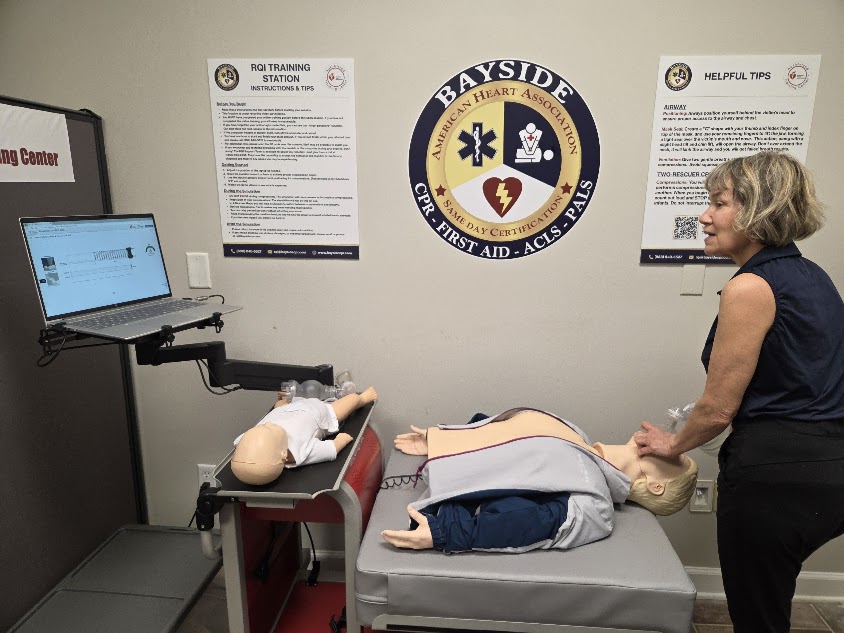
The New Jersey Board of Nursing does not accept online-only CPR certificates for clinical practice. Because resuscitation is a hands-on physical skill, nurses must demonstrate proficiency on a manikin. A hybrid model is widely used: nurses can complete the cognitive portion online through the AHA HeartCode system, then attend a brief in-person skills verification session to demonstrate compressions and ventilations.
EMTs and Paramedics
All EMT candidates in New Jersey are required to complete CPR training before their first day of EMT education and must present a valid CPR card for admittance to the New Jersey EMT Certification Examination. Current New Jersey regulations (N.J.A.C. 8:40A) require a valid certification in CPR at the Professional Rescuer or Health Care Provider level, issued by the AHA, the American Red Cross, the National Safety Council, or another entity determined by the Department to comply with AHA CPR Guidelines.
Required skills for EMS providers include adult, child, and infant CPR, AED use, and use of a bag-valve-mask. One hundred percent online CPR is not accepted by the state licensing department or for continuing education credits for Emergency Medical Services.
High School Teachers and Coaches
Teachers in New Jersey high schools need Adult, Child, and Infant Pediatric CPR, AED, and First Aid certification, though the path to getting it can vary by district. Some districts require hands-on training; others accept blended learning formats as long as they follow national standards.
Athletic coaches operating under the New Jersey State Interscholastic Athletic Association must hold valid CPR and First Aid certification obtained through hands-on training – online-only courses are not eligible for coaches. Renewals happen on a two-year cycle.
Personal Trainers and Fitness Professionals
Personal trainers in New Jersey are on the mandatory CPR and First Aid training list. The requirement is set by certification bodies rather than a single state law. Organizations, including NASM, ACE, and NSCA, all require current CPR/AED certification for their certified trainers. If you hold any of those credentials and your CPR card has lapsed, you are out of compliance with your certification body’s standards.
Childcare Providers
CPR certification is required for childcare providers in New Jersey, covering all age groups – adults, children, and infants. Annual Bloodborne Pathogens training is also commonly required alongside CPR for anyone working in licensed childcare settings.
Lifeguards and Aquatic Staff
Swimming facilities with lifeguards must be equipped with an AED. Bathing beaches with 500 or more swimmers or those with a lifeguard on duty are also required to have an AED on-site. Lifeguards must hold current CPR certification, and the AED they are trained to use must be functional and accessible.
General Public
You do not need to work in healthcare or hold a professional license to take a CPR class in New Jersey. The state actively encourages community members to get trained, and the legal landscape – covered below – gives bystanders real protection when they act in good faith.
New Jersey High School CPR Requirements
New Jersey was one of the first states to mandate CPR education at the high school level. State law requires students to receive education in CPR and AED awareness as part of middle and high school health curricula. Students learn to identify cardiac arrest, dial 911, perform chest compressions, and understand how to use an AED.
Starting with the 2014–2015 school year, hands-on CPR and AED instruction became a graduation requirement for all public and non-public high schools in the state. Instruction follows the standards of the American Heart Association, the American Red Cross, or any other nationally recognized organization.
AED Requirements in New Jersey: 2026 Overview
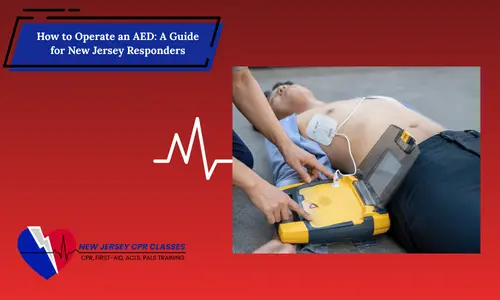
New Jersey has one of the most comprehensive AED placement frameworks in the country. AED placement is mandated in health clubs, K-12 schools, nursing homes, assisted living facilities, trampoline parks, public swimming pools, and bathing beaches.
Beyond placement, the state requires a full administrative program structure for AED ownership:
- Anyone acquiring an AED must ensure users hold current CPR/AED certification from the ARC, AHA, or an equivalent program recognized by the Department of Health.
- AEDs must be registered with the appropriate local EMS provider, and a licensed physician must be involved in protocol review for AED programs.
- Regular maintenance and testing of the device is required in line with manufacturer guidelines.
Each school must also have a written Emergency Action Plan that outlines who operates the AED, who performs CPR, who contacts 911, and how first responders will be met on arrival.
Good Samaritan Protections in New Jersey
One of the most common reasons people hesitate to help during an emergency is fear of legal consequences. New Jersey’s Good Samaritan law directly addresses this.
Under New Jersey’s Good Samaritan laws, individuals who provide emergency care – including CPR and AED assistance – in good faith and without compensation are protected from liability.
New Jersey’s Good Samaritan protection for AED program owners is conditional, meaning it depends on compliance with specific administrative requirements like registration, training, and physician oversight. If an organization’s AED program is not registered or lacks physician oversight, that protection may not apply.
For individual bystanders, the protection is more straightforward. Acting in good faith, without compensation, and calling for emergency assistance preserves your legal immunity – regardless of the outcome. The law also covers off-duty medical professionals, volunteer EMTs, and first responders who step in before they are officially on the clock.
Deliberate negligence is not covered. If someone acts recklessly or causes additional harm through willful misconduct, the legal shield does not apply.
Types of CPR Courses Available in New Jersey
New Jersey training centers offer a range of AHA-aligned certification courses. Here is a breakdown of the most commonly sought:
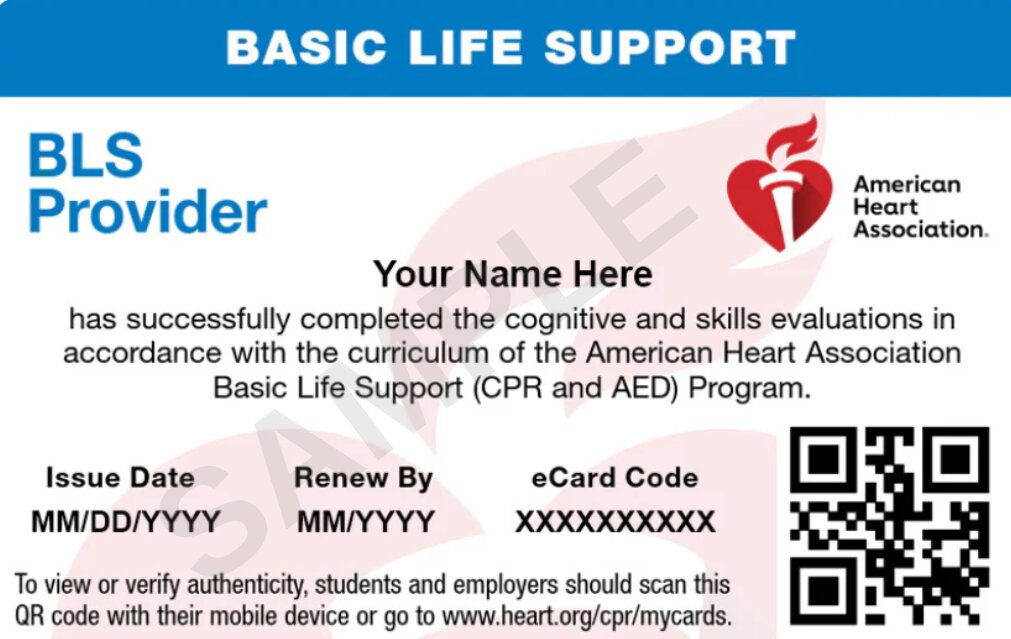
BLS for Healthcare Providers
The foundational course for nurses, doctors, EMTs, dentists, and allied health professionals. Covers adult, child, and infant CPR, two-rescuer techniques, bag-valve-mask ventilation, and AED use. Certification is valid for two years. An in-person or blended (HeartCode + skills session) format is required for clinical compliance in New Jersey.
CPR/AED for the General Public
Lay rescuer courses that teach hands-only and compression-plus-breath CPR for adults. These courses do not issue a healthcare provider card but are ideal for parents, teachers, workplace teams, community groups, and anyone who wants to be ready in an emergency.
ACLS – Advanced Cardiovascular Life Support
For experienced healthcare providers who manage cardiac arrest and other cardiovascular emergencies in clinical settings. Covers pharmacology, rhythm recognition, airway management, and team dynamics. ACLS provides CE contact hours that can count toward New Jersey nursing license renewal requirements.
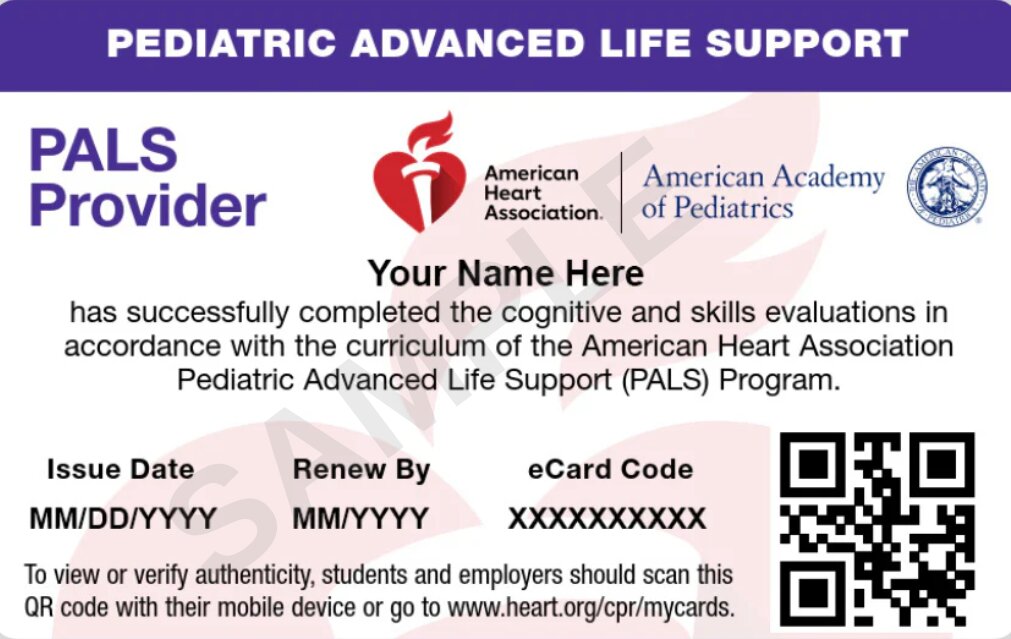
PALS – Pediatric Advanced Life Support
For nurses, physicians, EMTs, and other providers who treat pediatric patients in emergencies. Covers respiratory failure, shock, and pediatric cardiac arrest algorithms.
How to Choose the Right CPR Course in New Jersey
Before registering, ask yourself:
What is the certification for?
If it is for a healthcare job, clinical rotation, or EMT licensing, you need an AHA BLS Healthcare Provider course with an in-person skills component. If it is for a coaching role, you need hands-on First Aid/CPR – online-only will not meet the NJSIAA standard.
Does your employer or licensing board specify a provider?
New Jersey employers may be specific about provider type, renewal timing, and AED inclusion. If your certification is for a board, agency, or school system, verify the exact accepted providers before registering.
Do you need CE credit?
ACLS and PALS often carry continuing education hours applicable toward New Jersey nursing license renewal. Confirm this with your training center before you book.
Is blended learning an option?
Blended CPR courses – online courses with an instructor-evaluated skills test – are recognized in New Jersey. Online courses without an instructor-evaluated skills test are not recognized for most professional and licensing purposes.
Final Thoughts
CPR training in New Jersey is not a single, one-size-fits-all requirement. The right course depends on your profession, your employer’s expectations, your licensing board’s standards, and whether you need a card that satisfies a legal or regulatory requirement or one that simply builds your personal confidence and preparedness.
The state’s 2026 framework continues to push for broader community access to training while maintaining rigorous standards for those whose roles put them closest to emergencies. Whether you are enrolling for the first time or coming in for a renewal, working with an authorized AHA training center ensures your certification meets New Jersey’s requirements and reflects the most current resuscitation science.
This content is for informational purposes only and does not constitute legal or medical advice. Requirements can change. Always verify current standards with your employer, licensing board, or the New Jersey Department of Health.
Frequently Asked Questions
Can I take CPR training fully online in New Jersey?
For most professional and licensing purposes, no. New Jersey’s EMT licensing standards, the New Jersey Board of Nursing, and NJSIAA coach requirements all require a hands-on skills evaluation. Blended learning – where you complete the knowledge portion online and then attend a brief in-person skills session – is accepted by most professional bodies.
What is the difference between CPR and BLS?
CPR (Cardiopulmonary Resuscitation) refers to the technique itself. BLS (Basic Life Support) is the certification course designed for healthcare providers that includes CPR along with team-based resuscitation, advanced airway support, and AED use. Lay rescuer CPR courses are appropriate for the general public; BLS is the standard for anyone in a clinical or EMS role.