An infant’s or child’s clinical condition can deteriorate rapidly during a critical illness or injury, making early recognition and prompt intervention essential. Providing timely and appropriate care requires specialised training in paediatric emergency response.
PALS training equips medical providers with the knowledge and skills needed to assess young patients, prioritise treatment, and provide high-quality care. Many hospitals, emergency departments, urgent care centres, and pediatric facilities across New Jersey expect healthcare professionals to maintain current PALS credentials.
This guide provides a complete overview of the PALS credential, including what the certification involves, why it is important, who needs it, prerequisites, course content, training duration, and the steps required to receive the American Heart Association PALS Provider eCard.
What Is PALS Certification?
PALS is an advanced emergency cardiovascular care programme developed by the American Heart Association. The term PALS combines three key concepts:
- Pediatric: The branch of medicine focused on the care of infants, children, and adolescents.
- Advanced: A higher level of emergency care that builds on Basic Life Support by incorporating advanced assessment, clinical decision-making, and treatment techniques.
- Life Support: Medical interventions used to maintain or restore breathing, circulation, and other vital functions during critical illness or injury.
Pediatric Advanced Life Support qualification demonstrates competency in recognising, assessing, and managing serious medical conditions affecting infants and children in accordance with current evidence-based resuscitation guidelines.
Why Is PALS Certification Important?
Infants and children often experience medical emergencies differently from adults, requiring assessment and treatment approaches that reflect their age, anatomy, and physiology. A clear understanding of these differences helps medical providers assess paediatric patients accurately and respond appropriately
This advanced life-saving training helps to:
- Identify early signs of clinical deterioration.
- Perform structured paediatric assessments.
- Prioritise treatment based on the patient’s condition.
- Manage respiratory and cardiovascular emergencies.
- Apply current evidence-based resuscitation guidelines.
- Communicate and coordinate effectively during team-based resuscitation.
What Does PALS Certification Cover?
PALS training combines clinical knowledge, practical decision-making, and hands-on skills that prepare healthcare professionals to manage a wide range of pediatric emergencies.
Key topics covered during PALS certification include:
Assessment and early recognition
Participants learn to use the Pediatric Assessment Triangle and a systematic assessment process to identify clinical deterioration and determine appropriate interventions.
Respiratory and airway management
The course covers the recognition of respiratory distress and respiratory failure while teaching airway management and ventilation techniques.
Shock recognition and treatment
Medical providers learn to identify different types of shock, assess perfusion, and provide timely treatment based on the patient’s condition.
High-quality CPR and cardiac care
Learners develop the skills to perform high-quality CPR, recognise cardiac rhythms, manage bradycardia and tachycardia, and apply cardiac arrest and post-cardiac arrest algorithms.
Emergency medications and treatment algorithms
Training introduces the medications commonly used during paediatric emergencies and explains how treatment algorithms support clinical decision-making.
Team dynamics and case-based scenarios
Realistic emergency scenarios help participants strengthen communication, leadership, and teamwork skills while applying PALS concepts in simulated clinical situations.
Who Needs PALS Certification?
PALS certification is commonly required for medical providers who assess or treat infants and children during medical emergencies. Employer requirements vary by role and healthcare setting, but the certification is often expected for professionals involved in paediatric emergency and critical care.
Healthcare roles that commonly require or recommend PALS certification include:
- Physicians: Paediatricians, emergency physicians, hospitalists, anaesthesiologists, and medical residents.
- Nursing professionals: Registered nurses, paediatric nurses, emergency department nurses, neonatal intensive care unit staff, and paediatric intensive care unit staff.
- Emergency medical services: Paramedics and emergency medical technicians involved in paediatric emergency response.
- Allied health professionals: Respiratory therapists, physician assistants, and nurse practitioners who provide care for infants and children.
PALS vs ACLS: How These Certifications Differ
PALS and ACLS are both advanced resuscitation certifications developed by the American Heart Association, but they focus on different patient populations and emergency care approaches.
The main differences between ACLS and PALS are shown below:
| ACLS | PALS |
| Focuses on adult patients | Focuses on infants and children |
| Covers adult cardiac emergencies | Covers paediatric respiratory and cardiovascular emergencies |
| Uses adult assessment and treatment approaches | Uses age-specific paediatric assessment and treatment approaches |
| Includes adult cardiac rhythm recognition and management | Includes paediatric rhythm recognition and management |
| Focuses on adult advanced life support situations | Focuses on paediatric advanced life support situations |
What Are the Prerequisites for PALS Certification?
Healthcare professionals enrolling in PALS should already understand basic life support principles and possess the clinical knowledge needed to care for pediatric patients. The course builds on existing medical experience rather than introducing basic healthcare concepts.
Before attending a PALS course, participants should generally have:
- Valid BLS certification
- Basic understanding of ECG rhythm interpretation
- Familiarity with emergency medications and pharmacology concepts
- Knowledge of airway management principles
- Experience working in a healthcare environment
How Long Does It Take to Complete PALS Certification?
PALS training completion time depends on the learning pathway and the participant’s familiarity with the course material.
Common factors that may affect the timeline include:
- First-time certification or renewal
- Classroom, blended learning, or other available course formats
- Previous experience with paediatric emergency care
- Time available for completing the required coursework
Important Things to Know Before PALS Training
Proper preparation can help participants approach PALS training with a better understanding of the course expectations. Avoiding common preparation mistakes can make the learning process smoother and more effective.
Build a Strong BLS Foundation
PALS expands on basic life support principles, so having a clear understanding of CPR, airway management, and patient assessment can make it easier to follow advanced paediatric care concepts.
Understand the Course Expectations
PALS covers complex topics such as paediatric assessment, emergency algorithms, and resuscitation techniques. Familiarising yourself with the course structure and requirements beforehand can help you prepare effectively.
Check Certification Requirements in Advance
PALS requirements may vary depending on your role, employer, and clinical responsibilities. Confirming workplace expectations before enrolling helps ensure you complete the appropriate training.
Allow Enough Time for Preparation
Reviewing materials shortly before the course may leave limited time to understand important concepts. Setting aside time for preparation allows participants to become familiar with the topics covered during training.
How Long Is PALS Certification Valid?
PALS certification remains valid for two years from the date of successful course completion when issued through the American Heart Association. Healthcare providers should renew their certification before it expires to maintain current knowledge of updated clinical guidelines and continue meeting employer requirements.
Renewing on time also helps prevent employment interruptions for positions that require active PALS credentials. Many healthcare professionals schedule renewal several weeks before expiration to allow enough time to complete the course without unnecessary delays.
How Do You Earn PALS Certification?
Earning PALS certification requires completing the required coursework and demonstrating competency in essential paediatric emergency care skills. New Jersey CPR classes offers a flexible learning option that allows busy professionals to complete training according to their schedules.
The certification process includes:
- Enroll in an American Heart Association PALS course through New Jersey CPR classes
- Complete the online coursework at your own pace using a computer, tablet, or smartphone
- Visit a nearby skills verification station in New Jersey
- Demonstrate essential PALS skills and complete the competency evaluation
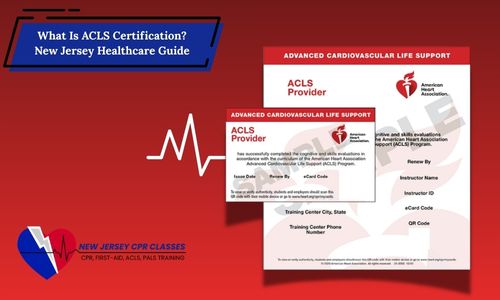
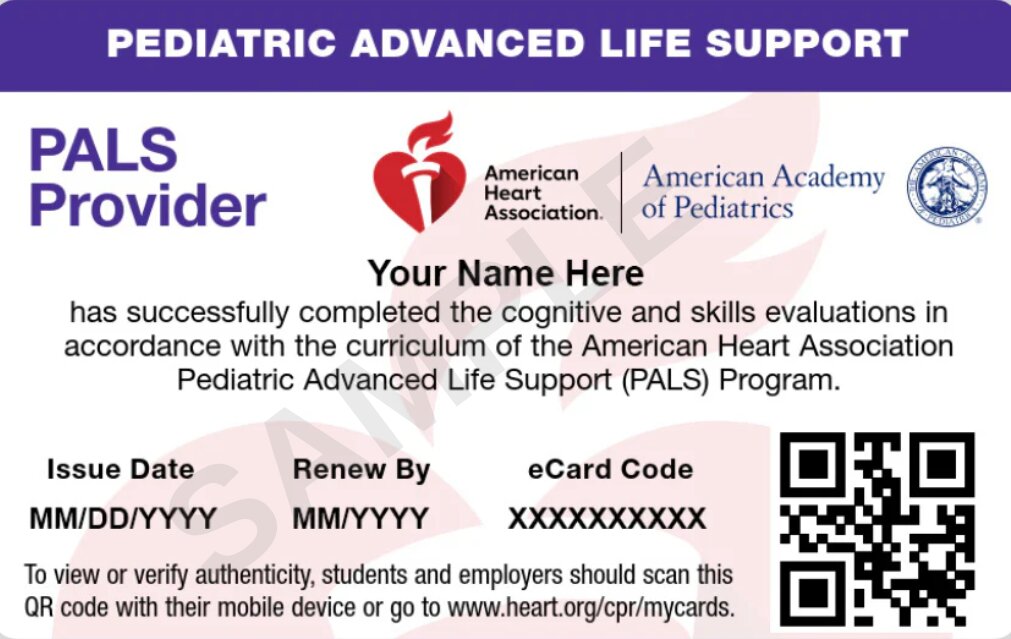
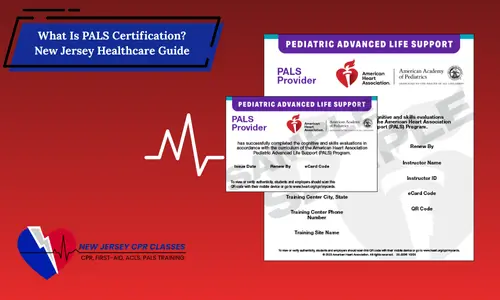
- Receive your AHA PALS Provider eCard after completion
Get Certified with New Jersey CPR Classes
PALS certification helps medical providers strengthen their ability to assess and respond to paediatric emergencies with confidence. Completing this training allows professionals to maintain the knowledge and skills needed for effective emergency care while meeting workplace and professional requirements.
New Jersey CPR Classes provides American Heart Association PALS courses with flexible scheduling options and convenient skills verification locations throughout New Jersey. Our AHA PALS certification is accepted nationwide, allowing participants to complete their training in New Jersey and use their credential across healthcare settings throughout the United States.
Frequently Asked Questions About PALS Certification
Can non-healthcare professionals take PALS certification?
No. PALS certification is intended for healthcare providers who are responsible for assessing and managing pediatric emergencies. The course requires a clinical background and knowledge of emergency care concepts, making it unsuitable for individuals without healthcare experience.
What happens if my PALS certification expires?
If your PALS certification expires, you will need to complete a PALS renewal course or retake the full PALS course based on your eligibility and current certification status. Employers may have specific requirements for a lapsed credential.
Is the PALS eCard from New Jersey CPR Classes valid in another state?
Yes. The AHA PALS Provider eCard issued through New Jersey CPR Classes is recognised throughout the United States and can be used to meet employer or professional requirements in all states.
How do I verify my PALS certification?
PALS certification can be verified through the American Heart Association’s eCard system using the information provided on the issued credential.
Can I complete PALS certification while working full time?
Yes. New Jersey CPR Classes offers flexible PALS certification options that allow busy healthcare professionals to complete the required coursework around their work schedules. Participants can complete the online portion at their own pace before attending the skills verification session.
Who benefits from having PALS certification?
Healthcare professionals who provide care for infants and children can benefit from PALS certification. This includes physicians, nurses, paramedics, respiratory therapists, physician assistants, nurse practitioners, and other medical providers who may respond to pediatric emergencies or work in clinical settings involving young patients.