Healthcare professionals working in emergency departments, intensive care units, cardiac care units, and other clinical settings may need specialized training to respond to life-threatening cardiovascular emergencies. Advanced Cardiovascular Life Support (ACLS) provides the knowledge and practical skills needed to recognize these emergencies and support patients through critical stages of care.
For nurses, physicians, paramedics, and other medical professionals in New Jersey, obtaining an American Heart Association (AHA) ACLS course completion card can be an important part of meeting workplace requirements and maintaining professional qualifications.
Whether you are completing ACLS training for the first time or renewing an existing card, understanding the course requirements, available training formats, and certification process can help you plan your next steps.
This guide explains what ACLS certification involves, who needs it, what the course covers, and how healthcare providers can complete their training in New Jersey.
What Is ACLS Certification?
Advanced Cardiovascular Life Support (ACLS) is an advanced training program developed by the American Heart Association for healthcare professionals who participate in managing cardiac arrest, stroke, and other serious cardiopulmonary emergencies.
The course builds on Basic Life Support (BLS) knowledge and focuses on more advanced emergency response skills. Participants learn to assess patients, recognize potentially life-threatening conditions, apply appropriate treatment algorithms, and coordinate care with other members of a resuscitation team.
ACLS training addresses several areas of emergency cardiovascular care, including:
- Cardiac arrest management: Recognizing cardiac arrest and coordinating appropriate resuscitation efforts.
- Heart rhythm recognition: Identifying abnormal heart rhythms and understanding the appropriate response.
- Airway management: Supporting oxygenation and ventilation during emergencies.
- Defibrillation and cardioversion: Understanding when and how electrical interventions are used.
- Emergency medications: Learning the role of medications in cardiovascular emergency management.
- Stroke recognition: Identifying signs of stroke and understanding the importance of timely intervention.
- Post-cardiac arrest care: Understanding the care required after the return of spontaneous circulation.
- Team communication: Coordinating responsibilities and maintaining effective communication during resuscitation.
The AHA’s 2025 ACLS course also places emphasis on preventing cardiac arrest, maintaining high-quality CPR, and improving the performance of resuscitation teams.
Who Needs ACLS Certification in New Jersey?
ACLS certification is intended for healthcare professionals who direct or participate in the management of serious cardiovascular and cardiopulmonary emergencies.
Not every healthcare position requires ACLS. The need for this training depends on your clinical responsibilities, workplace policies, and the type of patients you treat.
Common healthcare professionals who may need ACLS include:
Registered Nurses
Registered nurses working in emergency departments, intensive care units, cardiac care units, and other critical care environments may need ACLS training.
These professionals may participate in cardiac arrest response, monitor patients with unstable heart rhythms, and assist with emergency interventions.
For example, an ICU nurse in Newark may need an active AHA ACLS course completion card as part of the hospital’s employment or credentialing requirements.
Physicians and Medical Doctors
Physicians working in emergency medicine, cardiology, anesthesiology, and critical care may need ACLS training depending on their responsibilities.
The course provides a structured approach to managing adult cardiovascular emergencies and coordinating treatment during resuscitation.
Paramedics and Emergency Medical Professionals
Paramedics may encounter patients experiencing cardiac arrest, severe cardiovascular complications, or other life-threatening medical conditions.
ACLS training helps prepare these professionals to recognize emergencies, apply appropriate treatment protocols, and coordinate care during emergency response.
Respiratory Therapists
Respiratory therapists working in hospitals and critical care environments may participate in airway management, ventilation support, and resuscitation efforts.
ACLS training can be relevant to their responsibilities when they are involved in managing adult cardiopulmonary emergencies.
Other Healthcare Professionals
Other clinical professionals may also need ACLS if their positions involve advanced emergency response or their employers specifically require an AHA ACLS course completion card.
If you are unsure whether ACLS is necessary for your position, check with your department manager, employer, or credentialing organization before registering.
What Are the Requirements for ACLS Certification?
Before enrolling in an ACLS course, healthcare providers should understand the knowledge and preparation needed to complete the training successfully.
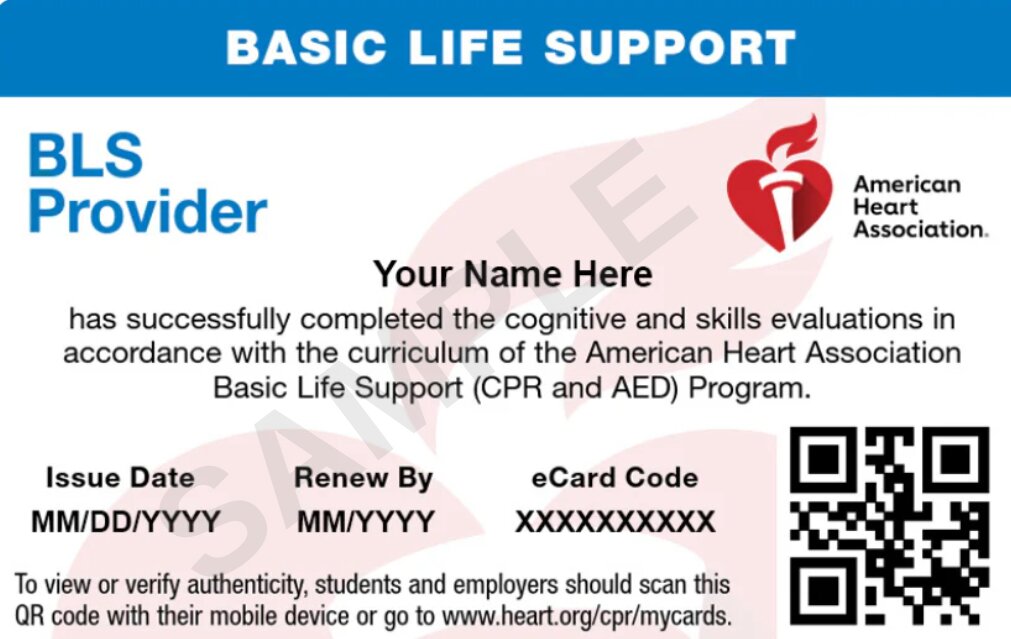
The AHA ACLS Provider Course builds on foundational BLS skills, so familiarity with adult CPR, airway support, and basic emergency response is important.
Here are some areas to consider before taking the course:
1. BLS Knowledge
ACLS builds on the lifesaving skills taught in BLS. Participants should understand high-quality CPR, AED use, and basic airway management.
A current AHA BLS Provider course completion card may also be required by your employer or training provider. Check the specific enrollment requirements before registering.
2. Precourse Self-Assessment
The AHA ACLS Provider Course requires participants to complete a Precourse Self-Assessment (PSA) before the course.
This assessment helps identify areas where additional preparation may be needed. It evaluates knowledge of important ACLS concepts, including rhythm recognition and pharmacology.
Completing the assessment beforehand can help you prepare for the course material and identify topics that deserve additional attention.
3. Understanding of ACLS Algorithms
Participants should become familiar with the systematic approach used to assess and manage adult cardiovascular emergencies.
This includes understanding cardiac arrest algorithms, symptomatic bradycardia, tachycardia, and other emergency response pathways.
4. Completion of Course Requirements
To receive an AHA ACLS Provider course completion card, participants must complete the applicable learning, knowledge assessment, and skills requirements for their selected course format.
Review the requirements of your chosen training option before beginning.
What Does the ACLS Course Cover?
The AHA ACLS Provider Course focuses on practical decision-making and coordinated emergency response.
Rather than concentrating only on memorizing treatment information, the training helps healthcare professionals understand how different clinical findings influence emergency management.
Some of the main course topics include:
Recognition of Cardiac Arrest
Participants learn to identify cardiac arrest and understand the importance of starting high-quality CPR promptly.
The course emphasizes minimizing interruptions, maintaining effective chest compressions, and coordinating the appropriate resuscitation response.
Cardiac Rhythm Recognition
Recognizing abnormal heart rhythms is an important part of ACLS.
Participants learn to identify rhythms associated with cardiac arrest and other cardiovascular emergencies, including ventricular fibrillation, pulseless ventricular tachycardia, bradycardia, and tachycardia.
Understanding these rhythms helps healthcare professionals determine the appropriate emergency response.
Airway and Ventilation Management
Airway management plays an important role in caring for patients experiencing respiratory or cardiac emergencies.
ACLS covers ventilation strategies, oxygenation, and the role of airway interventions during resuscitation.
Emergency Medications and Electrical Interventions
The course addresses the use of emergency medications and electrical therapies in appropriate clinical situations.
Participants learn how these interventions fit into established treatment algorithms for cardiac arrest and symptomatic arrhythmias.
Post-Cardiac Arrest Care
Successful resuscitation does not end when a patient’s heartbeat returns.
Healthcare professionals also need to understand post-cardiac arrest care, including continued assessment, monitoring, and management of the patient’s condition.
High-Performance Resuscitation Teams
ACLS places significant emphasis on teamwork during emergencies.
Participants learn how team members can communicate clearly, understand their assigned responsibilities, and coordinate interventions during complex resuscitation situations.
How to Get ACLS Certified in New Jersey
Healthcare professionals in New Jersey can complete AHA ACLS training through an authorized training option that meets their professional and employer requirements.
New Jersey CPR Classes offers a HeartCode ACLS option that combines online coursework with a self-guided skills session.
The process involves the following steps:
Step 1: Register for an ACLS Course
Start by selecting the appropriate ACLS course option.
If you are taking ACLS for the first time, choose the initial course. If you already hold an ACLS card, check whether you qualify for the renewal option.
Make sure the course meets your employer’s requirements before completing your registration.
Step 2: Complete the Online HeartCode ACLS Course
The online portion allows you to work through the course material at your own pace.
HeartCode ACLS covers important cardiovascular emergency concepts, clinical scenarios, and treatment approaches. The online learning experience also adapts to your knowledge and performance.
You can complete the coursework according to your schedule before moving on to the skills assessment.
Step 3: Complete Your ACLS Skills Session
After completing the online coursework, visit a CPR Verification Station to complete the required skills assessment.
During this stage, you demonstrate the applicable ACLS skills using a Voice-Assisted Manikin.
The assessment focuses on applying the required skills and following the appropriate emergency response procedures.
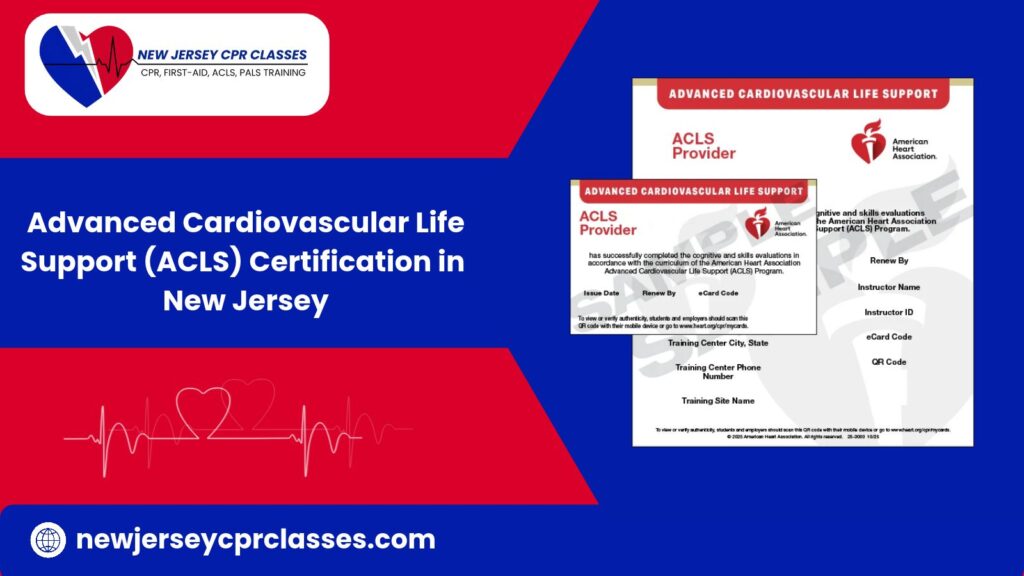
Step 4: Receive Your AHA ACLS Provider eCard
After completing all course requirements, you receive your official AHA ACLS Provider eCard.
The course completion card is generally valid for two years and can be used to demonstrate that you have completed the required ACLS training.
New Jersey CPR Classes provides the course and skills assessment options needed to complete this process.
How Long Does ACLS Certification Take?
The time required to complete ACLS depends on the course format, your previous experience, and how quickly you complete the learning material.
For HeartCode ACLS, the online learning portion is self-paced, so completion time can vary between participants. The skills session has a separate time requirement.
Healthcare professionals should allow enough time to complete the online material, prepare for the skills assessment, and meet all course requirements.
If you are working around hospital shifts or other professional responsibilities, a self-paced learning format makes scheduling easier.
How Long Is an AHA ACLS Certification Valid?
An AHA ACLS Provider course completion card is generally valid for two years.
The expiration date is based on the end of the month in which the card was issued.
For example, if your ACLS card was issued on March 12, 2026, it remains valid through March 31, 2028.
Healthcare professionals should monitor their expiration dates and arrange renewal before their current card expires.
Keeping your ACLS credentials current can help prevent interruptions when your employer requires proof of active advanced life support training.
ACLS Initial Certification vs. Renewal: What’s the Difference?
Healthcare professionals may take an initial ACLS course or a renewal course, depending on their previous training.
Understanding the difference can help you select the correct enrollment option.
ACLS Initial Course
The initial course is intended for healthcare professionals who are taking ACLS for the first time or who need to complete the full Provider Course.
It covers the foundational knowledge, assessment methods, treatment algorithms, and skills required for successful course completion.
ACLS Renewal Course
The renewal option is intended for healthcare professionals who already have ACLS training and need to update their course completion card.
It reviews important emergency response concepts and evaluates the participant’s ability to apply the required skills.
Renewal eligibility depends on the training provider’s requirements and the participant’s previous course completion status.
If your existing ACLS card has expired, check with the training provider before choosing a renewal option.
Why Choose New Jersey CPR Classes for ACLS Training?
Healthcare professionals often work rotating shifts, long hours, and demanding schedules. Finding time for additional training can be difficult when professional responsibilities leave little room for traditional classroom schedules.
New Jersey CPR Classes offers an AHA HeartCode ACLS option that allows eligible participants to complete the online learning portion independently before visiting a CPR Verification Station.
The training option includes:
- Official AHA HeartCode ACLS: Complete the online portion of the American Heart Association ACLS course.
- Self-Guided Skills Assessment: Demonstrate the required skills at a CPR Verification Station.
- Flexible Scheduling: Access online coursework at your convenience and arrange a skills session around your availability.
- Unlimited Attempts: Continue practicing and completing the required assessment until you meet the passing requirements.
Whether you are an emergency department nurse, paramedic, physician, or another healthcare professional, the course provides an option for completing your ACLS training in New Jersey.
Complete Your ACLS Certification in New Jersey
ACLS training helps healthcare professionals prepare for serious cardiovascular emergencies through structured assessment, clinical decision-making, and coordinated resuscitation skills.
Whether you are entering a critical care position, meeting an employer’s credentialing requirement, or renewing an existing course completion card, selecting the appropriate AHA ACLS course is an important step.
New Jersey CPR Classes offers initial and renewal ACLS training through AHA HeartCode ACLS and self-guided skills assessments at CPR Verification Stations.
Explore ACLS certification in New Jersey to review the available course options, check pricing, and register for your training.
Frequently Asked Questions About ACLS Certification in New Jersey
Is ACLS certification required for nurses in New Jersey?
ACLS is not a universal requirement for every nurse in New Jersey. However, hospitals and healthcare facilities may require it for nurses working in emergency departments, intensive care units, cardiac care units, and other specialized departments.
Can I take ACLS online in New Jersey?
Yes. The AHA offers HeartCode ACLS, a blended-learning option that combines self-paced online coursework with a required hands-on skills session. Completing only the online portion does not qualify you for the full ACLS Provider course completion card.
Can I get my ACLS eCard on the same day?
New Jersey CPR Classes offers same-day AHA ACLS eCard issuance after successful completion of all required course components and the skills assessment. The timing depends on completing the online coursework and successfully passing the required assessment.
Is an AHA ACLS course completion card accepted nationwide?
AHA ACLS Provider course completion cards are widely recognized by healthcare employers across the United States.
Is ACLS the same as BLS?
No. BLS focuses on foundational lifesaving skills, including CPR, AED use, and basic airway support. ACLS builds on those skills and addresses more advanced cardiovascular emergencies, including cardiac arrest, abnormal heart rhythms, and coordinated resuscitation efforts.