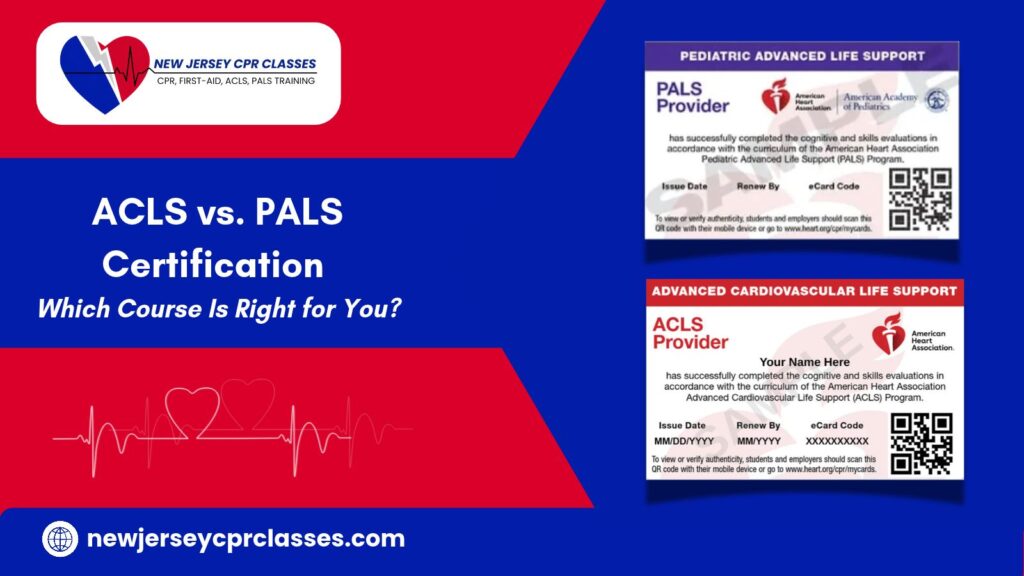
Healthcare professionals often need advanced life support training to meet job requirements and prepare for serious medical emergencies. Two common options are Advanced Cardiovascular Life Support (ACLS) and Pediatric Advanced Life Support (PALS). Although both focus on recognizing and managing life-threatening conditions, they serve different patient populations.
If you work in a hospital, emergency department, intensive care unit, ambulance service, or pediatric healthcare setting in New Jersey, choosing the right course depends on the patients you treat and the responsibilities of your role.
ACLS focuses primarily on adult cardiovascular emergencies, including cardiac arrest, dangerous heart rhythms, and acute coronary syndromes. PALS focuses on recognizing and managing critical illnesses in infants and children, including respiratory emergencies, shock, and cardiac arrest.
Understanding these differences can help you select the appropriate American Heart Association (AHA) course for your position, employer, and professional goals.
What Is ACLS Certification?
Advanced Cardiovascular Life Support (ACLS) is an advanced life support course for healthcare professionals who may need to respond to serious cardiovascular and respiratory emergencies in adults.
The American Heart Association’s ACLS course builds on basic life support knowledge and emphasizes rapid assessment, clinical decision-making, effective communication, and coordinated team responses. Participants learn how to recognize life-threatening conditions and manage emergencies using established resuscitation algorithms.
ACLS training covers several important areas, including:
- Recognizing cardiac arrest and initiating appropriate resuscitation measures
- Identifying and managing symptomatic arrhythmias
- Responding to acute coronary syndromes and stroke
- Managing respiratory arrest and supporting ventilation
- Understanding airway management and relevant emergency medications
- Coordinating resuscitation teams and communicating effectively
- Providing appropriate care after the return of spontaneous circulation (ROSC)
Who Should Take ACLS in New Jersey?
ACLS may be appropriate for healthcare professionals whose responsibilities include managing adult cardiovascular emergencies. Depending on their job requirements, this can include:
- Registered nurses working in emergency departments, intensive care units, and cardiac care units
- Physicians involved in emergency medicine, critical care, and hospital medicine
- Paramedics and other emergency medical professionals
- Anesthesia professionals involved in adult resuscitation
- Other healthcare providers who participate in advanced cardiac life support
For example, an emergency department nurse in Newark or a paramedic responding to emergencies in Jersey City may need ACLS training if their employer requires it.
However, not every healthcare professional needs ACLS. Your employer may require BLS alone or may specify another course based on your clinical duties. Check the exact certification requirement before enrolling.
What Is PALS Certification?
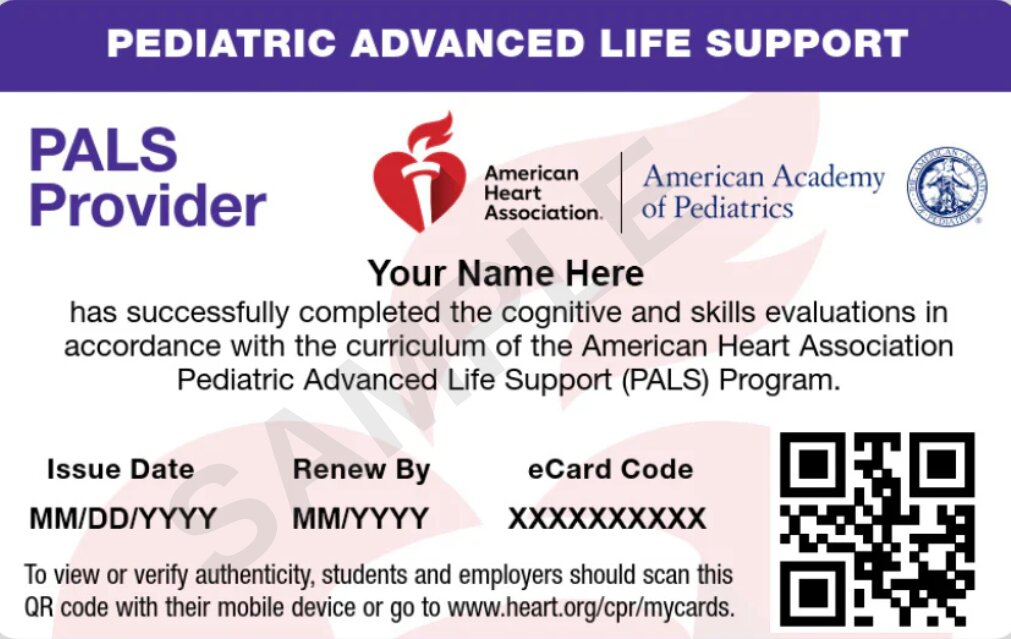
Pediatric Advanced Life Support (PALS) is an advanced life support course for healthcare professionals who assess and manage critically ill infants and children.
Children can show different signs of deterioration from adults. Respiratory problems, changes in circulation, and shock may develop differently in pediatric patients, making age-appropriate assessment and early intervention important.
The AHA PALS course teaches healthcare professionals how to recognize pediatric emergencies, assess a child’s condition, and respond through systematic treatment and coordinated team care.
PALS training covers topics such as:
- Assessing infants and children for signs of serious illness
- Recognizing respiratory distress and respiratory failure
- Identifying compensated and decompensated shock
- Recognizing unstable heart rhythms and pediatric cardiac arrest
- Performing high-quality CPR according to BLS recommendations
- Applying pediatric emergency treatment algorithms
- Working effectively with a resuscitation team
- Providing appropriate post-cardiac arrest care
Who Should Take PALS in New Jersey?
PALS may be required for healthcare professionals who regularly treat infants and children or participate in pediatric emergency response.
Common examples include:
- Pediatric nurses and pediatric intensive care nurses
- Pediatricians and other physicians who manage critically ill children
- Emergency department staff who treat pediatric patients
- Paramedics and emergency medical professionals involved in pediatric care
- Healthcare providers working in pediatric intensive care or emergency settings
For example, a nurse working in a pediatric unit in New Brunswick may need PALS, while a healthcare professional working primarily with adult cardiac patients may need ACLS instead.
The correct course depends on your clinical responsibilities and the requirements set by your employer or credentialing organization.
ACLS vs. PALS: Key Differences
The main difference between ACLS and PALS is the patient population and the type of emergency care emphasized in each course.
| Feature | ACLS | PALS |
| Full name | Advanced Cardiovascular Life Support | Pediatric Advanced Life Support |
| Primary focus | Adult cardiovascular and related emergencies | Life-threatening emergencies in infants and children |
| Common emergencies | Cardiac arrest, arrhythmias, acute coronary syndromes, stroke, and respiratory arrest | Respiratory distress, respiratory failure, shock, arrhythmias, and cardiac arrest |
| Assessment focus | Adult emergency assessment and cardiovascular management | Pediatric assessment and early recognition of deterioration |
| Intended audience | Healthcare professionals managing adult emergencies | Healthcare professionals managing pediatric emergencies |
| Common work settings | Emergency departments, cardiac units, ICUs, and EMS | Pediatric units, pediatric emergency departments, PICUs, and EMS |
| Completion card validity | Generally two years for an AHA course completion card | Generally two years for an AHA course completion card |
Both courses emphasize high-quality resuscitation, effective teamwork, and appropriate responses to emergencies. However, their training scenarios and treatment approaches reflect the needs of different patient populations.
The AHA issues course completion cards to participants who meet the applicable course requirements. These are not interchangeable credentials, so confirm which one your employer requires before registering.
Should You Choose ACLS or PALS?
Your clinical responsibilities are the best starting point when deciding between these courses. Consider the types of patients you treat, the emergencies you may be expected to manage, and your employer’s certification policy.
Choose ACLS If You Primarily Treat Adults
ACLS is generally the more appropriate choice if your work involves adult cardiac emergencies or advanced cardiovascular care.
You may need ACLS if you:
- Work in an adult emergency department or intensive care unit
- Participate in adult cardiac arrest response teams
- Provide emergency medical care to adult patients
- Need advanced training in arrhythmia recognition and management
- Have an employer requirement for an AHA ACLS course
For instance, a nurse working in an adult cardiac care unit in Trenton may be required to maintain an active ACLS course completion card.
Choose PALS If You Treat Infants and Children
PALS is generally the more appropriate choice if your role involves assessing and treating critically ill pediatric patients.
You may need PALS if you:
- Work in a pediatric emergency department or intensive care unit
- Provide emergency care to infants and children
- Participate in pediatric resuscitation teams
- Need training in pediatric respiratory emergencies and shock
- Have an employer requirement for an AHA PALS course
For example, a pediatric nurse in a hospital in Camden may need PALS to meet the facility’s clinical requirements.
Do You Need Both ACLS and PALS?
Some healthcare professionals need both courses because their responsibilities include adult and pediatric emergencies.
This may apply to emergency department clinicians, paramedics, critical care professionals, and other healthcare workers whose employers require advanced life support credentials for multiple patient populations.
However, you should not assume that both certifications are mandatory for your profession. Requirements vary by employer, department, job description, and clinical responsibilities.
If your position includes both adult and pediatric resuscitation, ask your employer whether both ACLS and PALS are required and whether any additional credentials are necessary.
Do You Need BLS Before Taking ACLS or PALS?
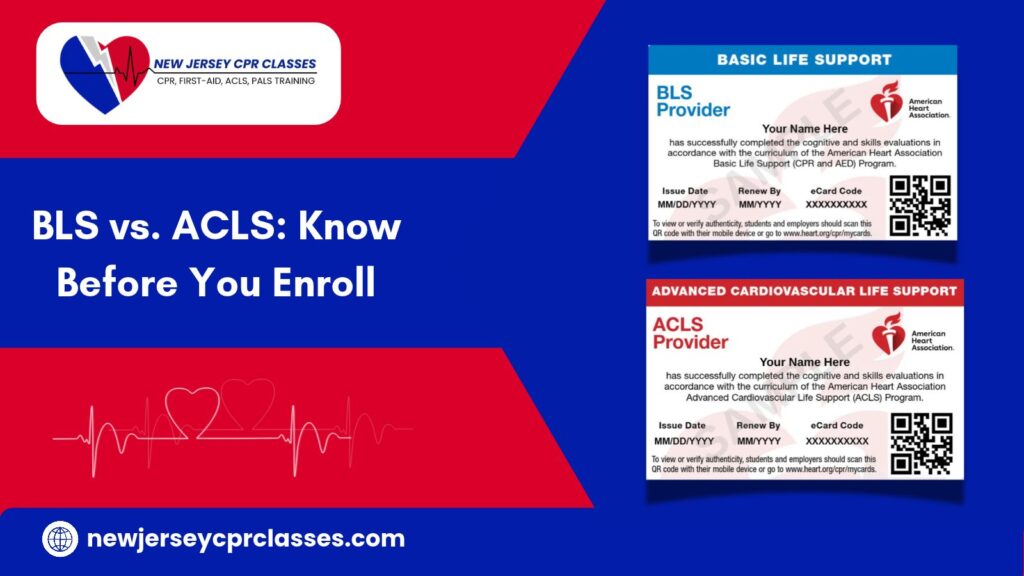
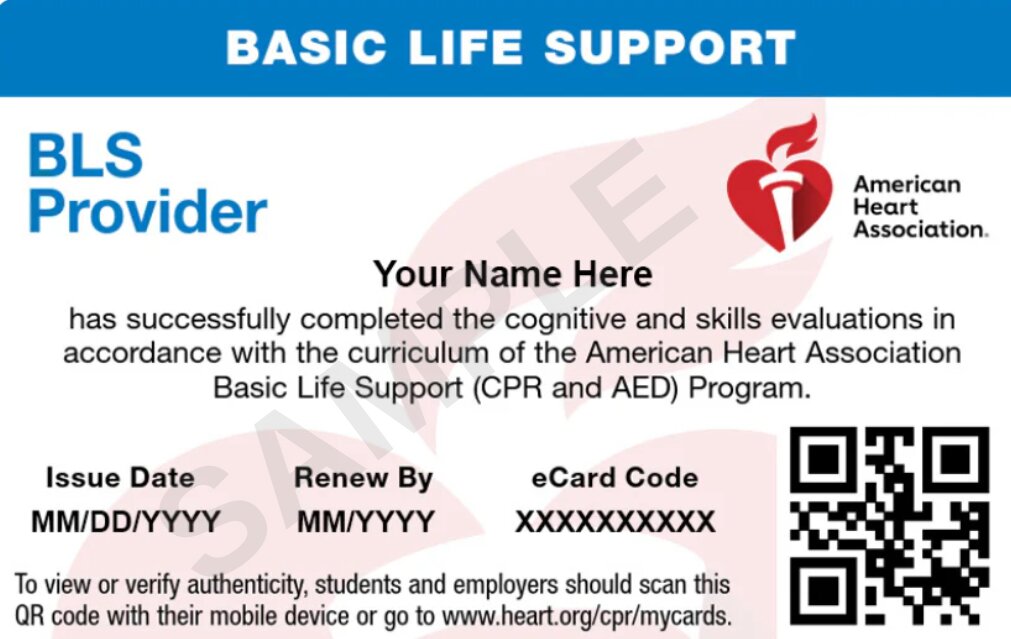
Basic Life Support (BLS) provides the foundation for recognizing cardiac arrest and performing high-quality CPR. It covers essential lifesaving skills, including CPR, AED use, and ventilation.
ACLS and PALS build on these foundational skills and apply them to more complex emergencies.
Before enrolling, check the prerequisites and current BLS requirements for your chosen course. You should also verify whether your employer requires a current AHA BLS Provider course completion card.
Having a BLS card alone does not automatically meet an employer’s requirement for ACLS or PALS. If your position requires advanced life support training, you will need to complete the appropriate course.
How Long Are ACLS and PALS Certifications Valid?
AHA ACLS and PALS Provider course completion cards are generally valid for two years from the date of successful course completion.
Healthcare professionals should check their card’s expiration date and their employer’s renewal policy to avoid a lapse in required credentials.
If your card is approaching expiration, you may be eligible for a renewal course, depending on the provider’s enrollment requirements and your previous training.
When scheduling your course, confirm that the certification type matches your employer’s requirements. A current ACLS card does not replace a required PALS card, or vice versa.
How Can You Complete ACLS or PALS Training in New Jersey?
New Jersey CPR Classes offers AHA ACLS and PALS courses for healthcare professionals who need initial training or renewal.
Depending on the course and available option, training can include an online learning component followed by a self-guided skills session. This format allows eligible participants to complete the learning portion at their own pace before demonstrating the required skills.
Before registering, review the course details and confirm that the format meets your employer’s requirements.
ACLS Course
The ACLS course is intended for healthcare professionals who need advanced training in adult cardiovascular emergencies.
Learn more about ACLS certification in New Jersey.
PALS Course
The PALS course is intended for healthcare professionals who need advanced training in pediatric emergencies.
Explore PALS certification options in New Jersey.
Both courses have initial and renewal options. Check the available course details, pricing, and enrollment requirements before selecting a session.