If you work in a New Jersey daycare, preschool, or family child care home, you already know CPR certification isn’t optional. What trips people up is the specifics: what the certification actually has to cover, how many staff need it, whether an online-only course counts, and which American Heart Association (AHA) course actually fits a childcare role. This guide walks through what New Jersey’s requirements say, according to the New Jersey Department of Children and Families (DCF), so you can confirm your training meets the standard before your next inspection or renewal deadline.
What New Jersey Actually Requires
New Jersey describes its CPR requirement for childcare providers by topic, not by a single named course. Licensed child care providers need current certification covering Adult, Child, and Infant (Pediatric) CPR, AED use, and First Aid. The training has to come from a recognized health organization, and it must include a hands-on skills component, not just an online quiz.
Licensed child care centers must also have at least two staff members with current CPR and First Aid certification present at all times when enrolled children are on site. That’s a staffing requirement tied to your actual schedule, not a one-time box to check during onboarding. If your only certified staff member calls out and no one else on shift holds a current card, your center falls out of compliance for that day.
There’s an added layer worth understanding. New Jersey’s DCF Office of Licensing, which governs whether your center or family child care home is legally allowed to operate, and the Child Care and Development Block Grant (CCDBG) program, which governs eligibility for state subsidy funding, are administered separately and don’t always require identical training. The CCDBG training page specifically calls for Pediatric First Aid and Pediatric CPR Training, delivered by a trainer or vendor certified through a recognized health organization, with hands-on skills practice built in. The American Heart Association is named as one of the accepted organizations. A course that satisfies DCF licensing may not automatically satisfy CCDBG grant eligibility, and vice versa, so if your program accepts state subsidy payments, it’s worth checking both sets of requirements rather than assuming one certification covers everything.
Why Online-Only Certification Doesn’t Meet the Requirement
This is where new providers get caught off guard most often. New Jersey requires a hands-on training component in addition to any online coursework. A certificate earned entirely through a self-paced online quiz, with no in-person skills check, does not satisfy licensing requirements.
For registered family child care providers specifically, the rule is even more direct: certification must be completed in a classroom setting, and training that is purely online cannot be accepted on its own. The reasoning makes sense. CPR is a physical skill. Reading about compression depth is different from demonstrating it, and the state wants providers who have actually practiced under supervision, not just watched a video.
This doesn’t rule out online learning entirely. Blended and self-guided formats, where you complete the knowledge portion online and then attend an in-person session to demonstrate your skills on a manikin, are standard AHA training paths and typically satisfy this requirement, since they combine online coursework with a verified, in-person hands-on skills session rather than skipping the practical component altogether.
Which AHA Course Fits a Childcare Role?
New Jersey CPR Classes is an American Heart Association Authorized Training Center, so every certification we issue is a fully valid AHA credential recognized nationwide. The American Heart Association offers several different Heartsaver-level courses, all built for people with little or no medical background, plus a dedicated Heartsaver Pediatric First Aid CPR AED course built specifically for those who care for infants and children. We offer two of these: Heartsaver First Aid CPR AED and Heartsaver CPR AED. Here’s what each one actually covers.
AHA Heartsaver First Aid CPR AED teaches Adult, Child, and Infant CPR, AED use, and a general first aid curriculum covering choking response, bleeding control, burns, sprains, and other common injuries. It results in a nationally recognized course completion card valid for two years, and it includes a full hands-on skills evaluation regardless of which training format you choose.
AHA Heartsaver CPR AED covers the same Adult, Child, and Infant CPR and AED skills, plus choking relief, without the broader general first aid module.
New Jersey’s CCDBG language specifically calls for “Pediatric First Aid,” which is a wording detail some CCR&R agencies interpret narrowly. As an AHA Authorized Training Center, we issue fully valid AHA certifications either way. If your program receives CCAP subsidy funding and you want to be certain which course your specific CCR&R will log against that wording, it takes one quick call to confirm. Most centers licensed directly through DCF, rather than through the CCDBG subsidy program, won’t run into this distinction at all.
Who Needs This Certification in New Jersey
CPR and First Aid certification requirements apply broadly across New Jersey’s childcare landscape:
- Licensed child care center staff, including lead teachers, assistant teachers, and directors
- Registered Family Child Care providers, who care for children in their own home
- Family, Friend, and Neighbor (FFN) providers, receiving subsidy payments to care for children they know personally
- Preschool staff, including private preschools and state-funded programs like Abbott Pre-K
- Nannies and in-home caregivers, who aren’t always required by law but are frequently asked by parents to hold current certification anyway
If you’re not sure which category applies to your role, check with your program’s licensing type. Center-based and home-based care fall under different sections of the New Jersey Administrative Code, and the exact training pathway can look slightly different depending on which one applies to you.
How Many Staff Need to Be Certified, and When
For licensed child care centers, the baseline is at least two staff members with current CPR and First Aid certification present whenever children are in care. Larger centers with multiple classrooms or extended hours typically need more than two certified staff to cover every shift without gaps. It’s worth mapping your actual staffing schedule against your certified staff roster rather than assuming two certifications automatically covers your whole operation.
New hires are generally expected to complete required health and safety training, including CPR and First Aid, early in their employment, often within the first few weeks per local CCR&R guidance. Don’t wait until a new employee’s first month wraps up to schedule their certification. Class scheduling and paperwork eat into that window faster than it sounds.
How Training Works at New Jersey CPR Classes
New Jersey CPR Classes is an accredited American Heart Association Training Center serving locations across the state, including Cherry Hill, Denville, Egg Harbor Township, Emerson, Jersey City, Lakewood, Morristown, Newark, Old Bridge, Princeton, Somerset, Swedesboro, South Amboy, and Union.
Certification follows a simple two-part structure. First, you complete Self-Guided Learning: the online coursework for your chosen course, done on your own schedule from any device. Second, you visit a nearby CPR Verification Station for a focused, in-person hands-on skills session using Voice-Assisted Manikins, which give real-time feedback on compression depth and rate as you practice and test. This format is one of the AHA’s own recognized training paths, combining self-paced online learning with an in-person hands-on skills session at an AHA-approved training station, and it results in the same AHA Course Completion Card as a traditional classroom course.
Pass your skills session and your official AHA eCard is issued the same day, ready to share with your employer, licensing agency, or CCR&R. If you don’t pass on the first attempt, you can try again at no additional cost.
For centers or family child care networks that need to certify multiple staff at once, group and on-site training options are available, which can simplify scheduling for directors coordinating certification across an entire team.
Certification Validity and Renewal
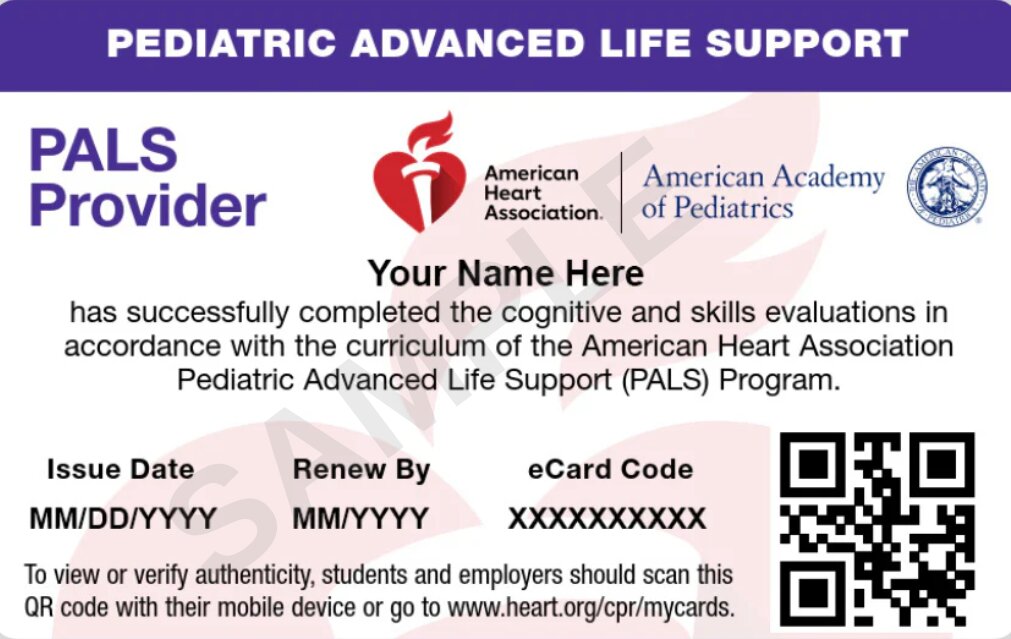
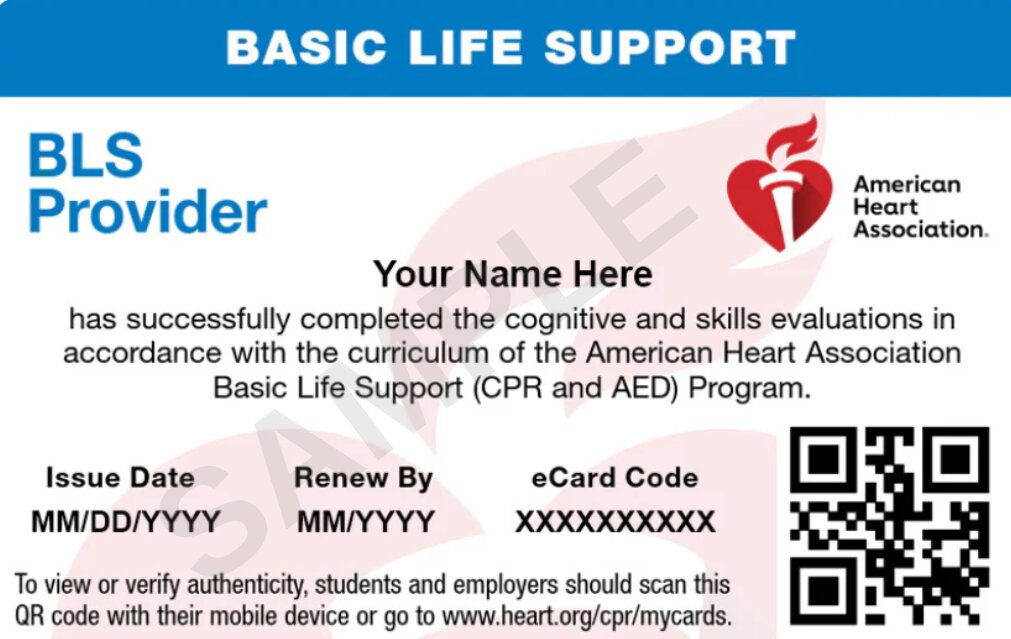
AHA Heartsaver, BLS, ACLS, and PALS certifications are all valid for two years from the completion date. After that, you’ll need to recertify to keep your credential current and stay in compliance with your license or registration.
Set a reminder well before your expiration date. Licensing inspections don’t pause for a lapsed card, and a gap in certification for even one staff member can affect your center’s compliance status if it drops you below the required minimum of certified staff on site.
Get Certified the Right Way
New Jersey’s CPR certification requirement for childcare providers comes down to a consistent set of elements: Adult, Child, and Infant CPR, AED training, First Aid, and a verified hands-on skills component. As an AHA Authorized Training Center, New Jersey CPR Classes issues fully valid, nationally recognized certifications covering exactly that. If your program runs on CCAP subsidy funding, it’s worth a quick check with your CCR&R on which course they log for the “Pediatric First Aid” line item, but for most centers and family child care providers, our courses cover the requirement directly.
New Jersey CPR Classes offers AHA Heartsaver First Aid CPR AED and Heartsaver CPR AED for childcare providers, along with BLS, ACLS, and PALS for programs that also need higher-level certification, such as summer camp health directors. Every course pairs Self-Guided Learning with a hands-on skills session at a CPR Verification Station near you, with your AHA eCard issued the same day. Get your team certified before your next deadline.
Frequently Asked Questions
Does New Jersey accept any CPR certification for childcare providers, or does it have to be a specific course?
New Jersey describes the requirement by topic rather than by product name: current certification covering Adult, Child, and Infant CPR, AED use, and First Aid, from a recognized health organization, with a hands-on skills component. The American Heart Association is listed as an accepted organization. Because the exact course name isn’t specified in state guidance, confirm with your CCR&R or licensing agency which specific course they’ll accept for your program.
Can I complete my CPR certification entirely online for a New Jersey childcare license?
No. New Jersey requires a hands-on training component in addition to any online coursework. For registered family child care providers, training must be completed in a classroom setting, and courses that are online only are not accepted.
What’s the difference between Heartsaver First Aid CPR AED and Heartsaver CPR AED?
Both cover Adult, Child, and Infant CPR and AED use. Heartsaver First Aid CPR AED adds a general first aid module covering injuries and illnesses beyond cardiac emergencies. Heartsaver CPR AED does not include that broader first aid component.
How long does a CPR certification last for childcare providers in New Jersey?
AHA certifications are valid for two years from the completion date, after which recertification is required.